Fade To Gray: The Pictures
At age eleven I was given my first camera as a Christmas gift, a Kodak Instamatic. That was the start of a life-long interest in photography. I have taken photographs ever since then, relishing in the excitement every time I picked up a packet of prints from the camera shop. My first real SLR camera was a Pentax Spotmatic F given to me by a friend in exchange for borrowing my trail bike (it never came back) around the age of 18. In 1979 I was offered a job as a news photographer with the Gisborne Herald. I did this for the next seven years. I was taught by Alan Peake how to not only take a useable news photo (in black and white) but to wind film, develop film, make prints and all the secret tricks of the darkroom trade. Wonderful years, all before colour photos were used in newspapers that I am so grateful to have experienced. During this time I sought to understand the magic of photography, particularly from a news perspective. Many years later I found my true niche as a scenic photographer, seeking to show the world the special beauty of the Gisborne-East Cape region.
The Scenics
The Black & Whites
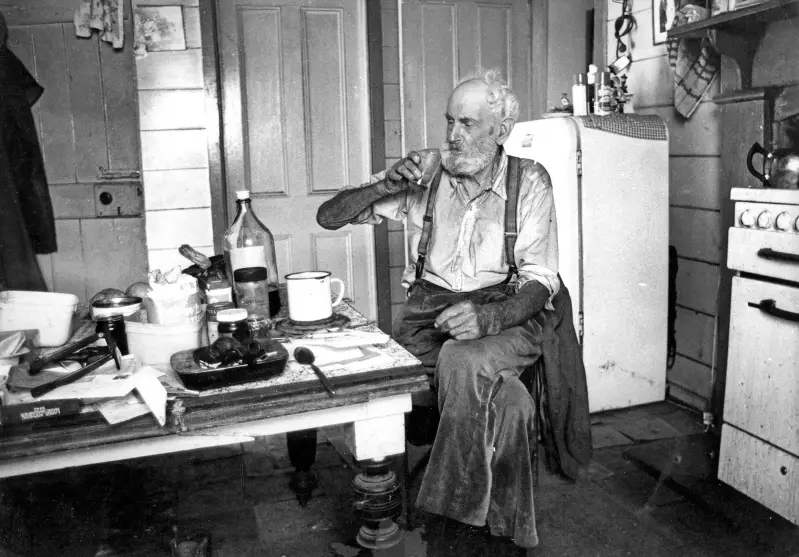
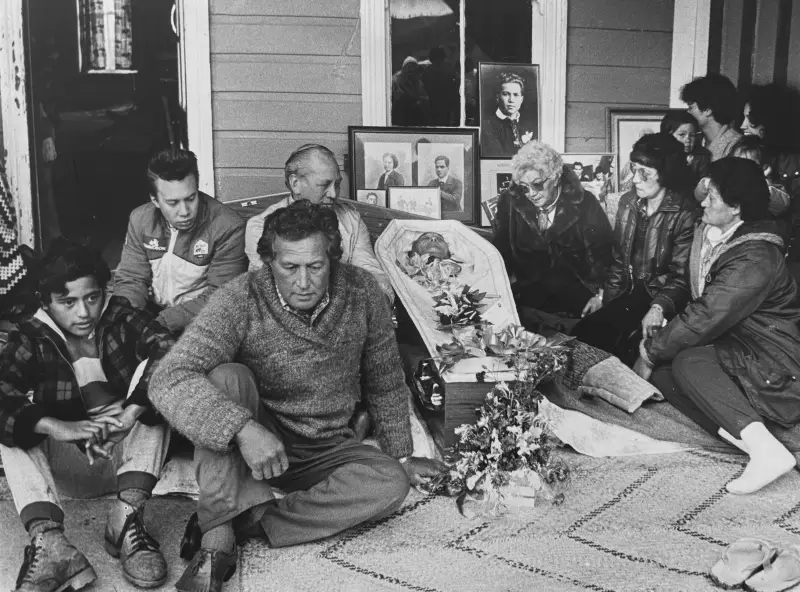
In the early 1980s I visited Wainui beachfront resident Arnold Butterworth to photograph him on what was believed to be his 104th birthday — his exact date of birth was, and remains, unknown. He lived in a ramshackle, overgrown cottage on the seaward side of Wairere Road. He poured me a Marmite jar of port to celebrate his birthday. Though almost blind, he cared for himself and maintained an extensive vegetable garden on an empty section across the road. Butterworth had been a member of the constabulary that trekked through the Urewera ranges to arrest Rua Kēnana at the Ngāi Tūhoe settlement of Maungapōhatu in 1916. He died on 18 November 1986.
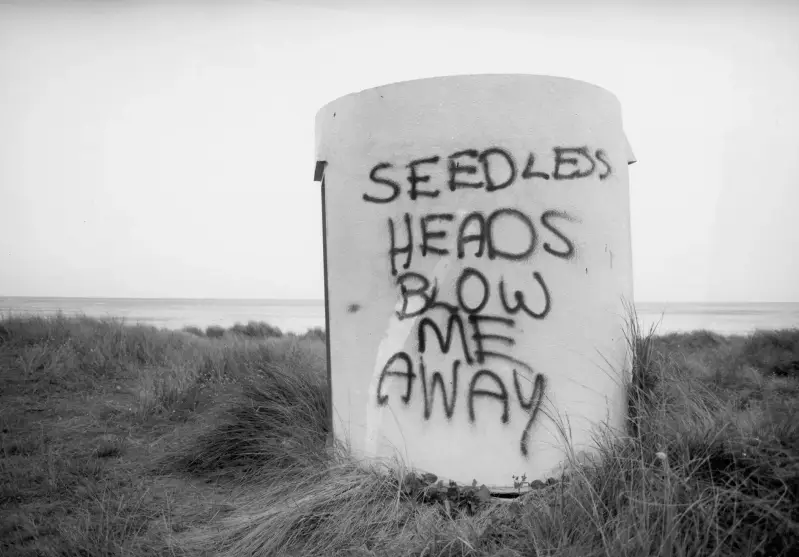
An images which I thought captured a moment in time in the early 1980s when marijuana was the recreational drug of the moment.
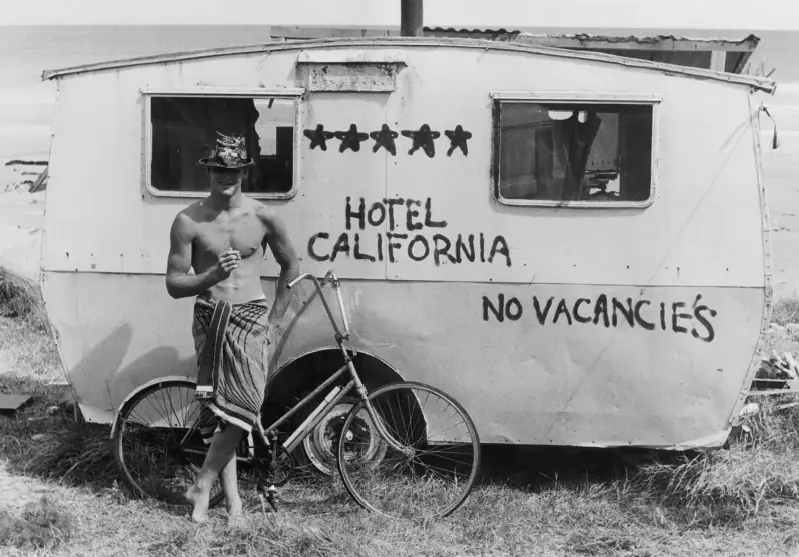
Welcome to the Hotel California. Local Vance Gilgren posed for me outside Owen William's caravan
parked up on the Makorori beachfront in the summer of 1985.
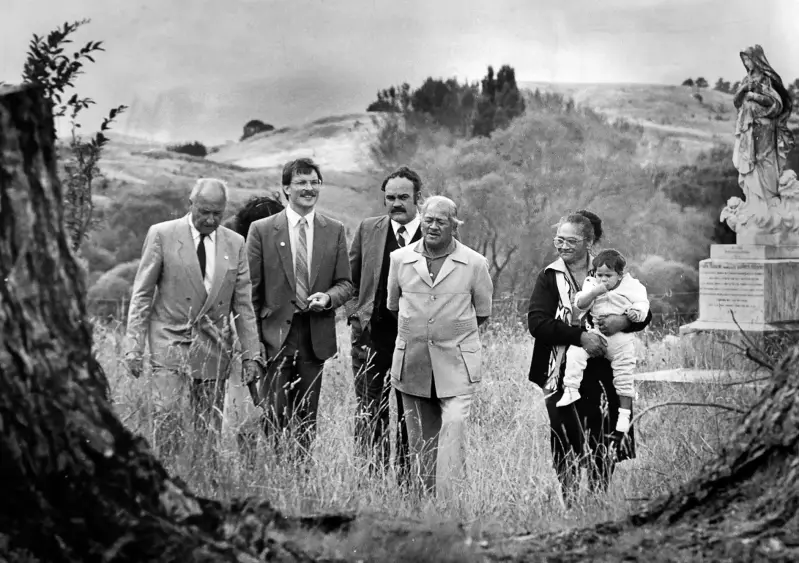
This might be my personal choice for "Best Picture'. It depicts a young Phil Goff, then Minister of Housing, and alongside Sir Henare Ngata, being shown over the land to be used for New Zealand's first papakainga housing at Hiruharama on the East Coast near Ruatoria. They are being shown about by Ngati Porou leaders of the time. I heard that Goff had this image enlarged and framed for his office at Parliament.
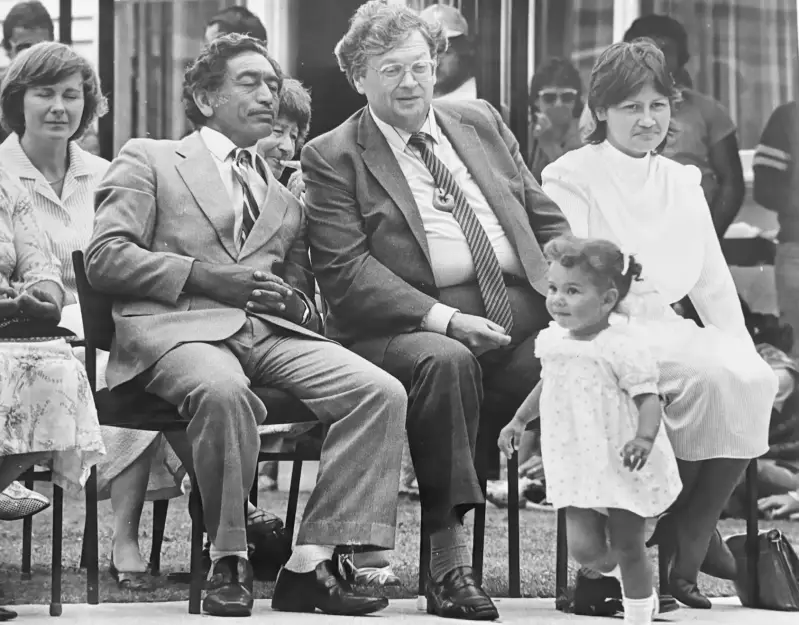
Another of my "Best Picture" awards belongs to this quick snap of then Prime Minister David Lange distracted by the innocent antics of a wee girl while listening to the endless speeches at a major function at a marae on the Eastern Bay of Plenty side of the East Coast.
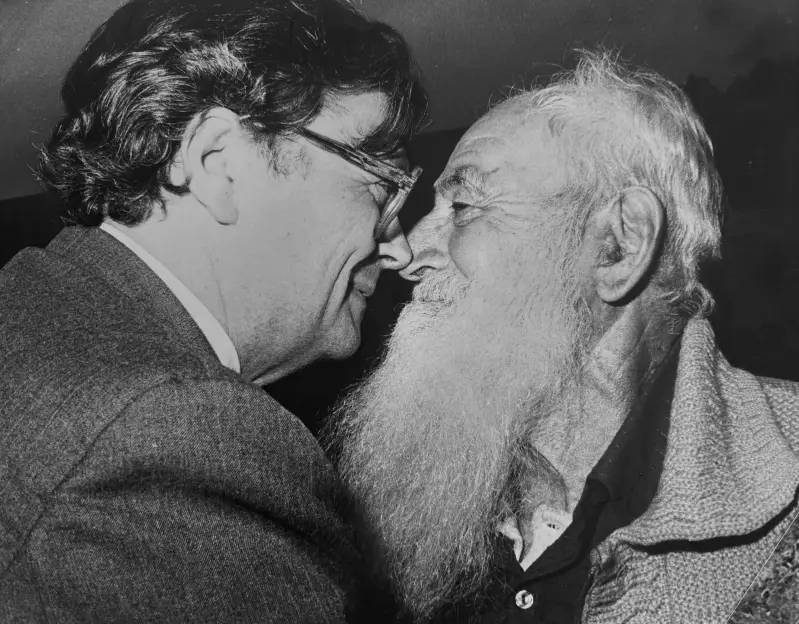
I took this mage of David Lange meeting East Coast kaumatua Kawhia Milner. After it appeared in the paper the Prime Minister's press secretary requested a copy and after I sent it to parliament, I received a letter of thanks from Lange himself which I still have in my possession.
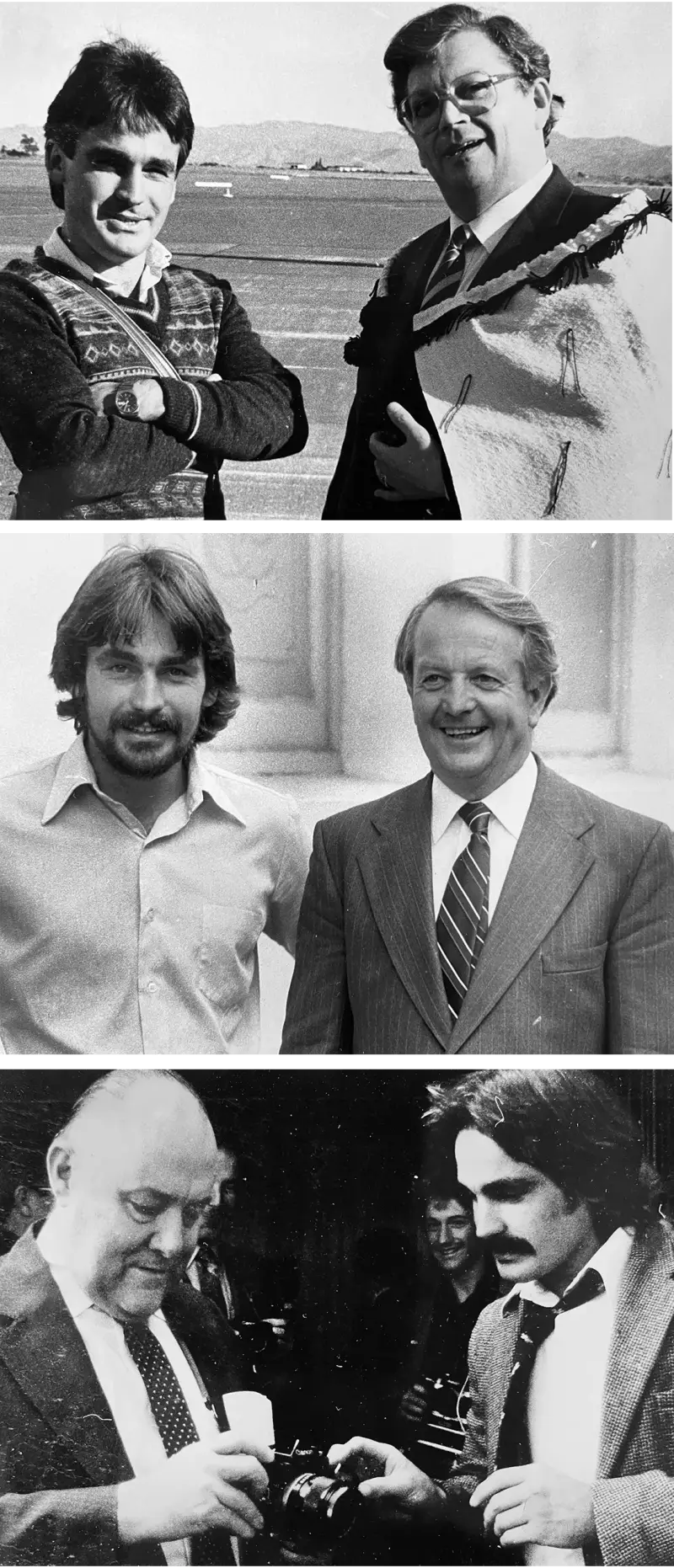
Long before the advent of "selfies" I went a bit stupid about getting myself photographed with the celebrities I photographed.
I was able to notch the [rime ministers Lange, Rowlings and Muldoon on my belt before I gave up the obsession
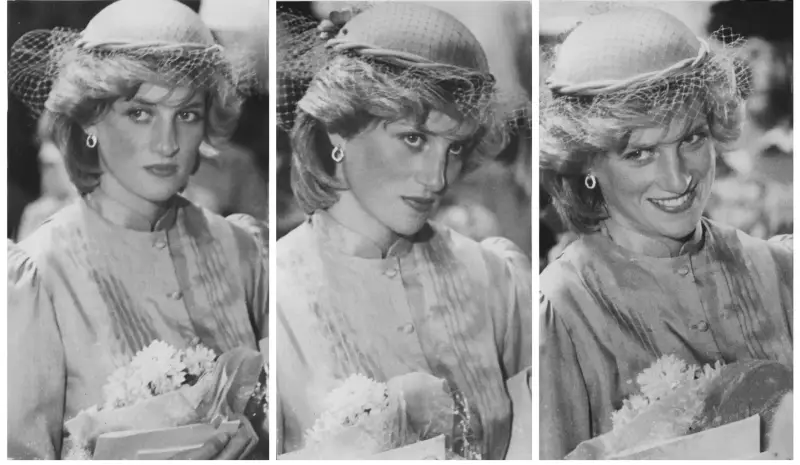
I captured this triptych of the newlywed Princess Diana inside Te Poho-o-Rawiri meeting house during her and Prince Charles’s 1983 visit to New Zealand. I've always thought the three images reflected the understated beauty and quiet grace that drew the world’s attention to Diana at that time.
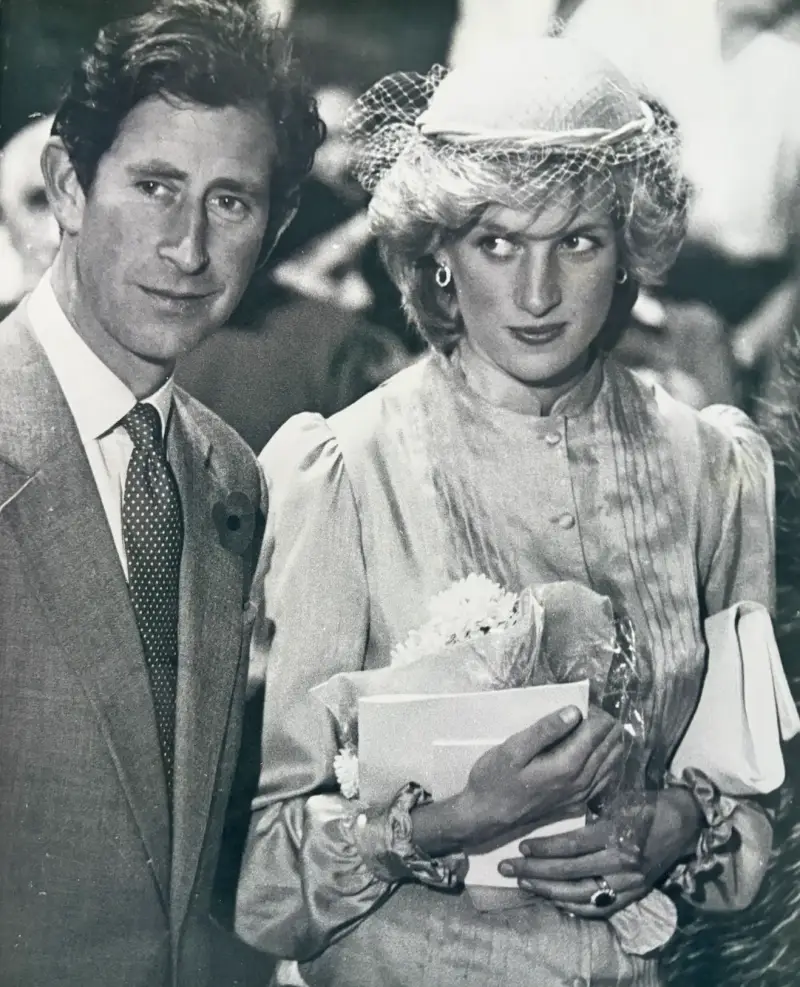
Looking back nearly 45 years, its incredible how young Prince Charles and Princess Diana were at the time.
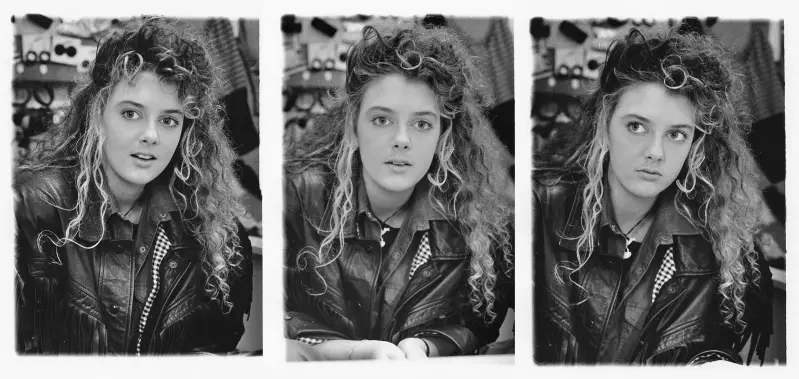
In the mid 1980s I had left the Gisborne Herald and went to Auckland to relieve as a news photographer for the New Zealand Herald for a few weeks. My walk to work from a friend's flat in Ponsonby took me through the Victoria Market each morning where I was attracted to the fresh faced beauty of this young woman who had a small silver jewellery stall. I plucked up the courage and asked if I could take her picture and she coyly consented. It wasn't until a few years later, after she had married New Zealand rugby league player and former All Black Matthew Ridge, that I realised I had photographed a young Sally Ridge, who went on to become a much-photographed celebrity in this country.
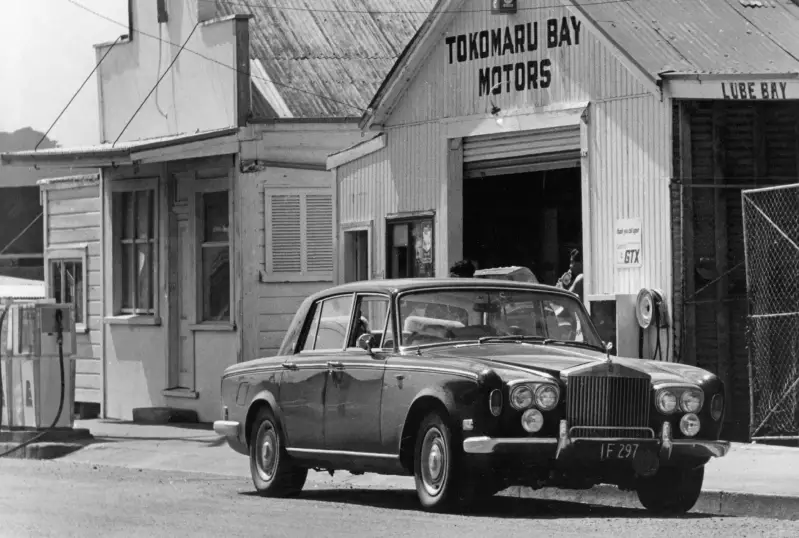
Talking about big celebrities — In a totally ironic juxtaposition, Prince Tui Teka's Rolls Royce Silver Shadow is parked up for a service at the Tokomaru Bay Motors garage on the East Coast in the early 1980s.
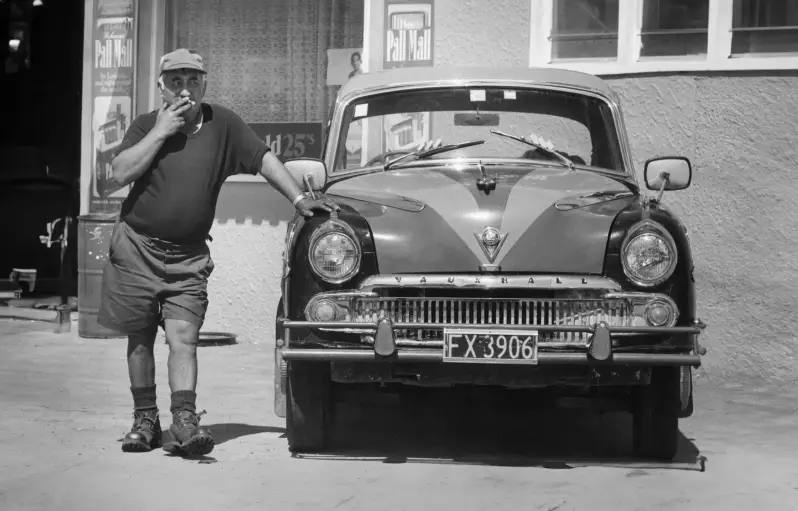
Across the road at the Tokomaru Bay dairy another East Coastie is equally proud of his 1950s model EIP Vauxhall. His name was Buster and he was a little bit shy but proud to pose with his well maintained set of wheels.
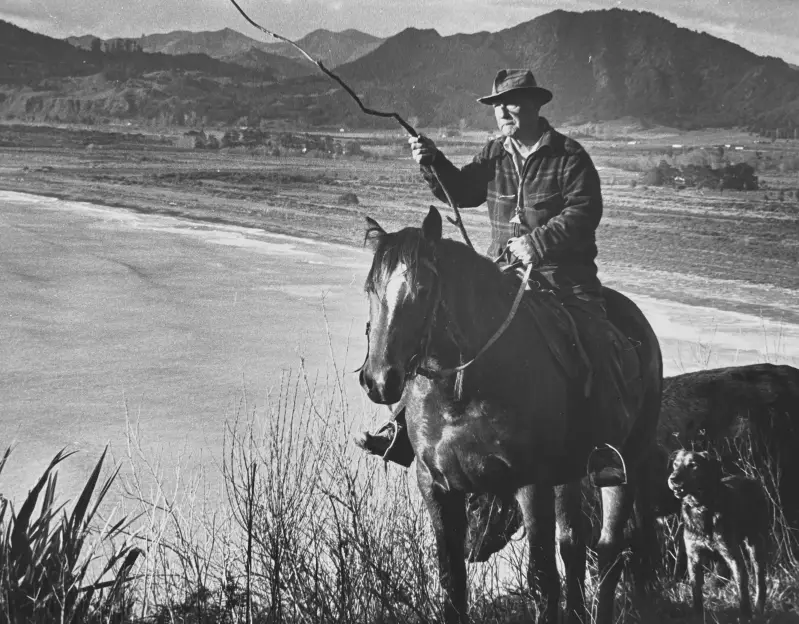
This lovely gentleman was as far as I know the last of the full-time drovers on the East Cape. I photographed him above Te Araroa's wide bay.
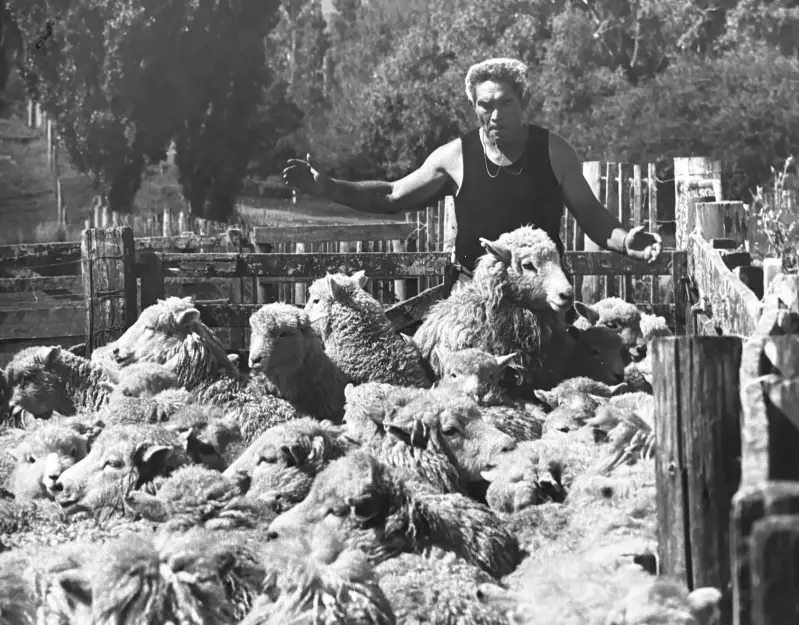
Travelling up and down State Highway 35, I was always on the lookout for photos that captured the East Coast culture.
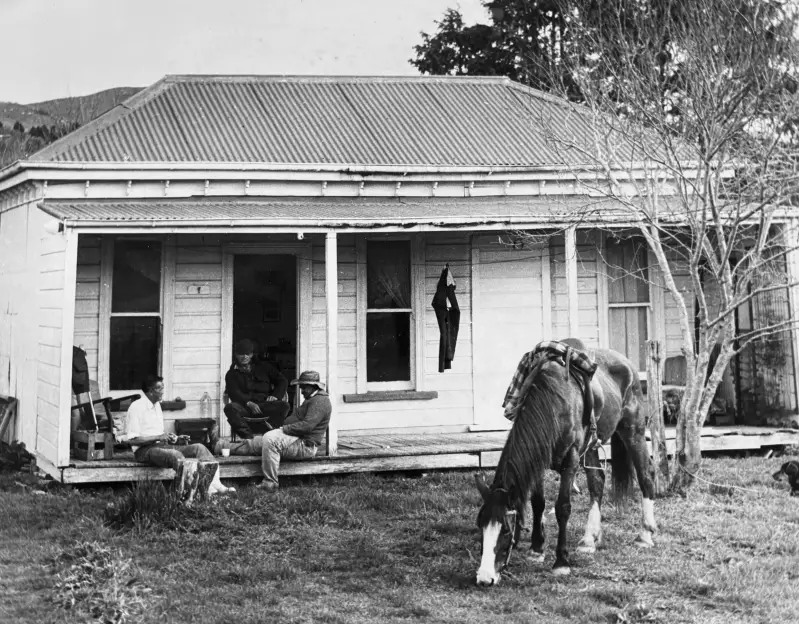
On my monthly trips up the East Coast in search of local stories for the Gisborne Herald with reporter Dave Conway I was conscious of being witness to the passing of an era and was always on the lookout for images such as these three men having a smoko break on the porch of a house in Tokomaru Bay.
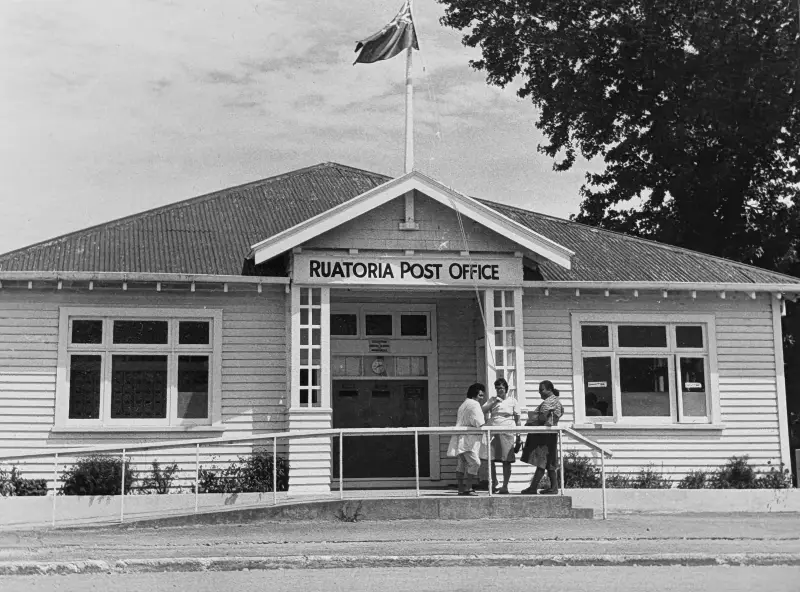
This image of local women stopping for a chat while collecting the mail from the Ruatoria Post Office captures another moment in time.
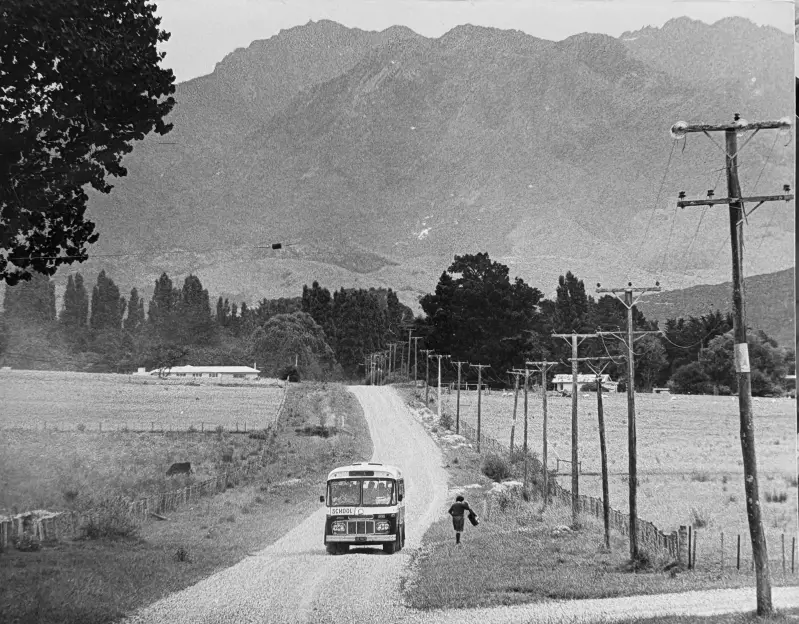
This is one of my favourite images from the time spent on the East Coast in the 1980s. The bus stopping to pick up a schoolboy on the dusty road near Ruatoria, long since tar-sealed, evokes for me a simpler time now passed.
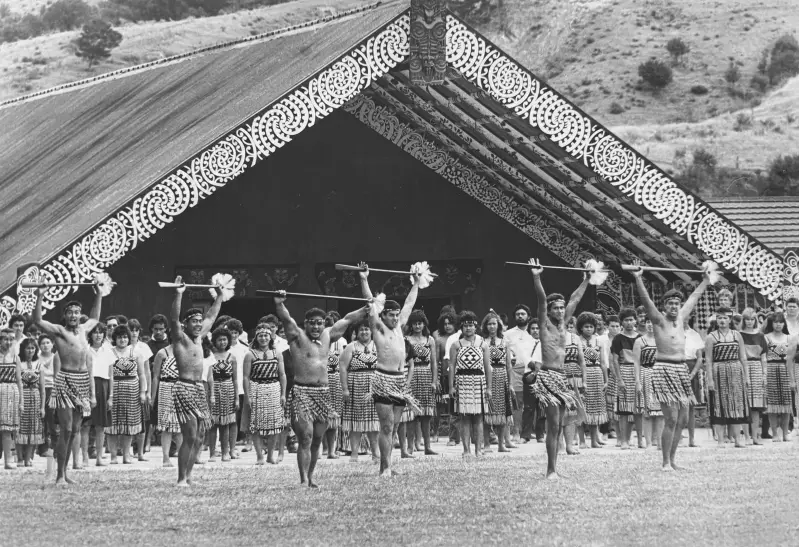
This image was taken at the re-opening of the Pakowhai Marae near Waituhi in the mid 1980s.
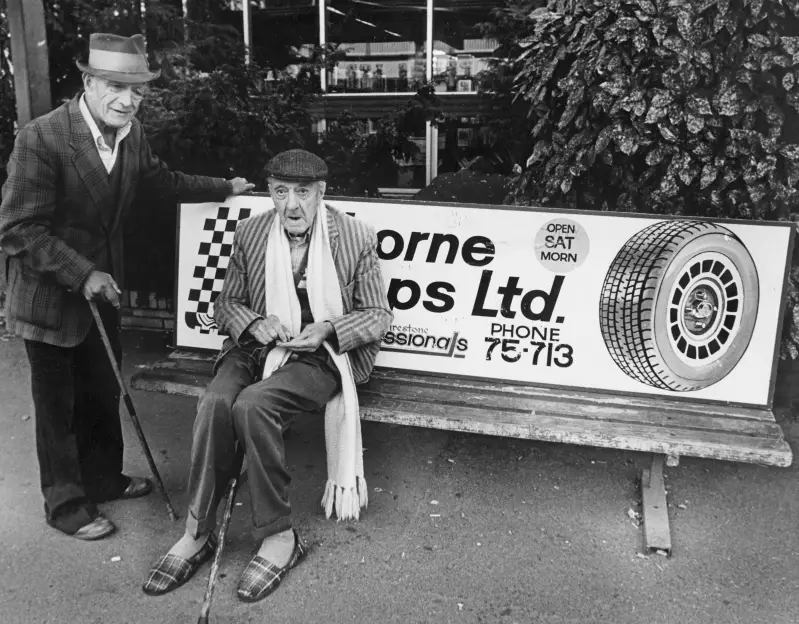
I became conscious of an era passing when I attempted to capture the odd parade of people who made the streets of Gisborne their home in the 1980s. I never got their names of these two gentlemen but I was fascinated by their perfrect manners and quirky dress sense.

Well-known and much-loved around Gisborne, Mick Thodey was a true character of the town in the pre-millennium years. For a long period from the 1950s he owned and operated Thodey's Dairy on the corner of Gladstone and Roebuck Roads. A generation of high school kids would get their before and after school sugar fixes from Thodey's Dairy.

One of the most intriguing characters to inhabit the streets of Gisborne in the 1980s was Buster Katae. Buster never really spoke to anyone but had this odd trick of stopping suddenly and looking skyward and then laughing when passersby followed his gaze.
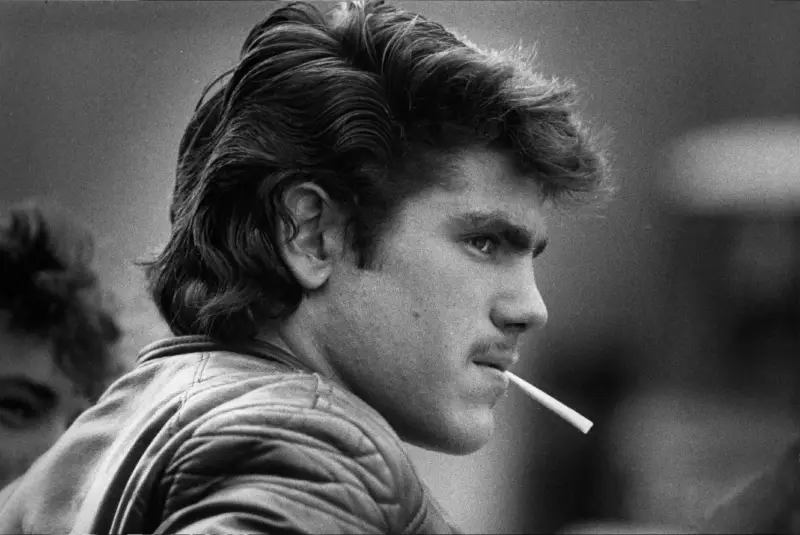
From the same era I photographed this local young man with movie star looks who was often seen hanging about on Gladstone Road.
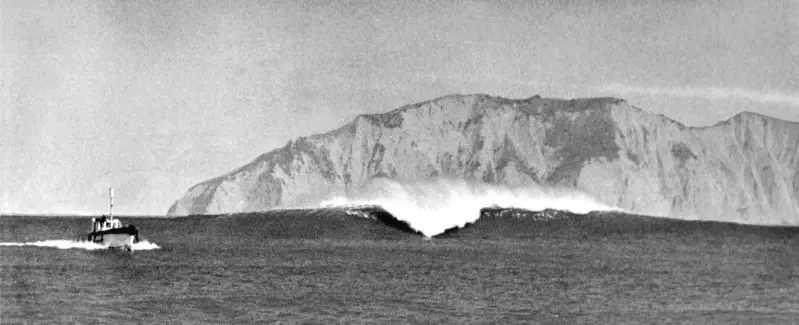
In the early 1980s surf magazine publisher and photographer Mike Spence gave me his Century 500mm lens. It enabled me to capture this once in a lifetime image of huge surf breaking way out in the centre of Poverty Bay in an offshore wind. The old pilot boat Takitimu was luckily on the spot to give the image its size perspective.

I never labelled myself as a 'surf photographer' but I am still stoked to this day with this one-click image of Stefan 'Teddy' Colbert performing what became his trademark backhand turn at the Stockroute, Wainui Beach, in the early 1980s. The picture was one of just a small number of surf shots I took with the Century 500 lens. I wish I had taken more.
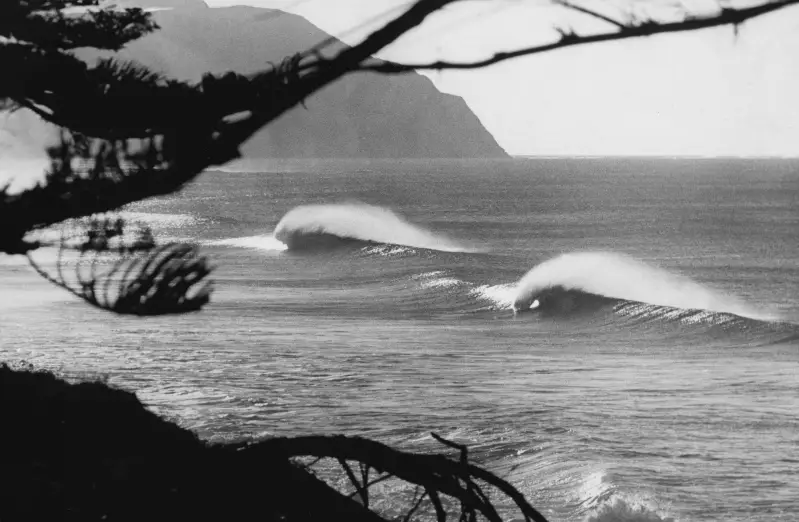
I became drawn to photographing the empty beauty of the surf and the sea around Gisborne.
This was one of my earliest scenic images that took me more and more in that direction.
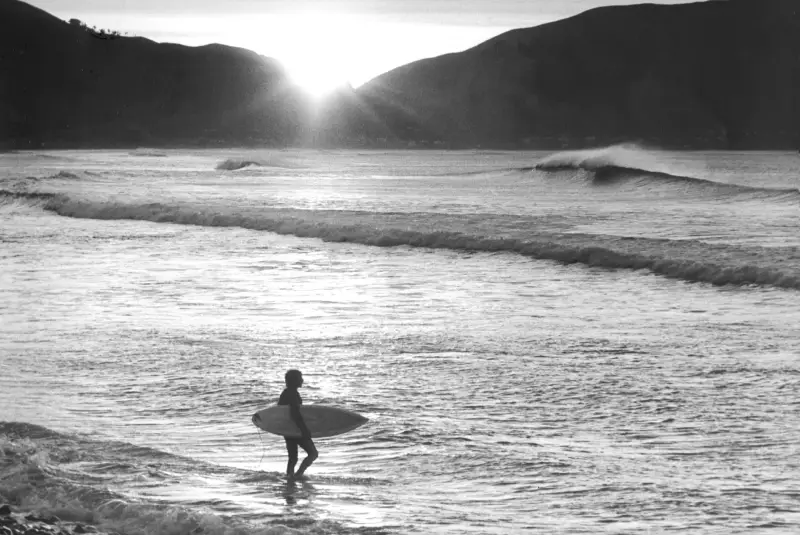
An early 1980s mid-winter morning with the sun rising in the Tatapouri Headland cleft and Dean Thomas heading out to surf Makorori Point.
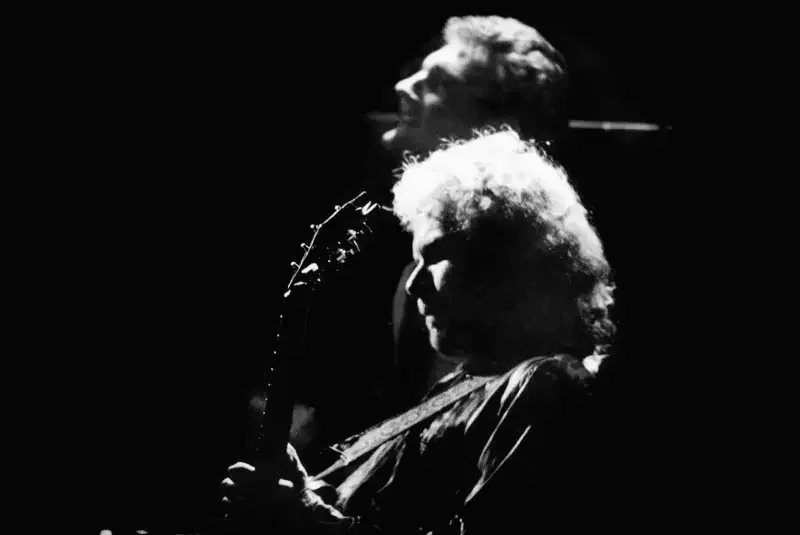
In the early 1980s I would experiment with low light photography at the River Bar, Gisborne's then number one music destination, by taking photographs of the bands in action. This image catches the raw talent and super exuberance of local guitarist and entertainer Nik Sim in full flight.

I made this composite in the darkroom (years before Photoshop!) of Ike Miringoarangi and Peter 'Spider' Tekira at the River Bar.
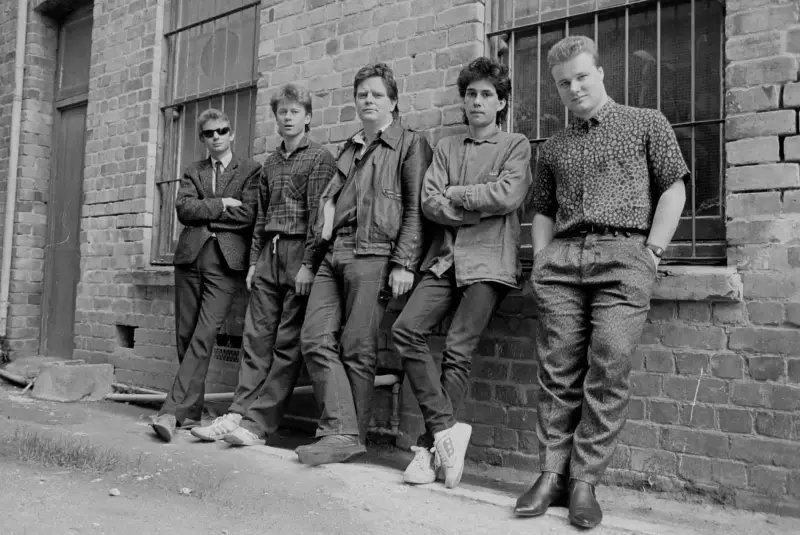
One thing led to another and I started taking publicity images for local bands. I photographed the Innocent Dingos looking very cool in the alley behind the Odeon Theatre. From left — Tim and Peter Stewart, Trevor Herk, Shane Bollingford and Andrew Schollum.
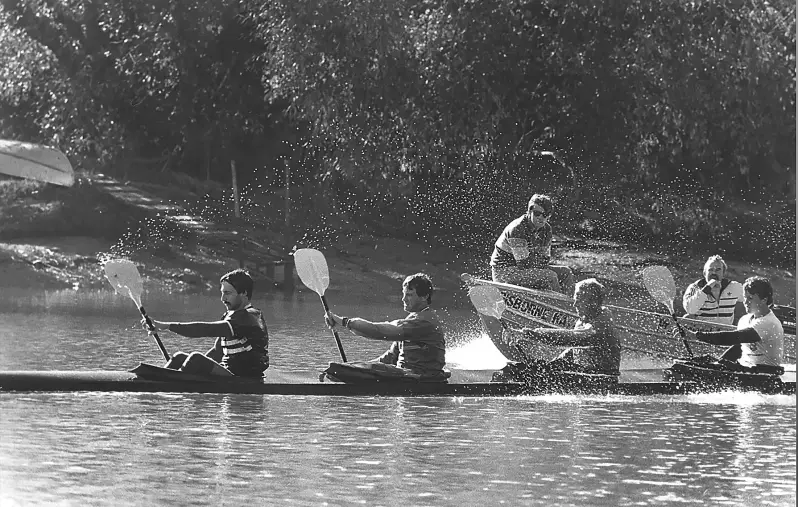
I took this image of the Olympic K4 team training on the Waimata River in Gisborne in 1984. They went on to win gold medals. From left— Alan Thompson, Ian Ferguson, Paul Macdonald and Grant Bramwell with Ben Hutchings in the coach boat.
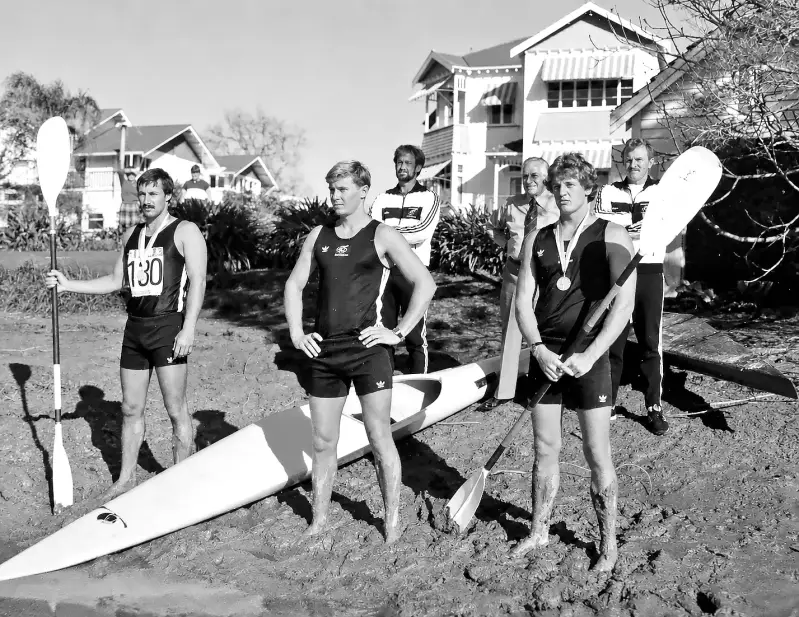
After their gold medal success at the Olympics I arranged this photo taken in the mud in front of Bill De Costa's riverbank house and boatshed beside the Waimata River which had been the team's headquarters and training ground during the four years leading up to the Los Angeles Games.
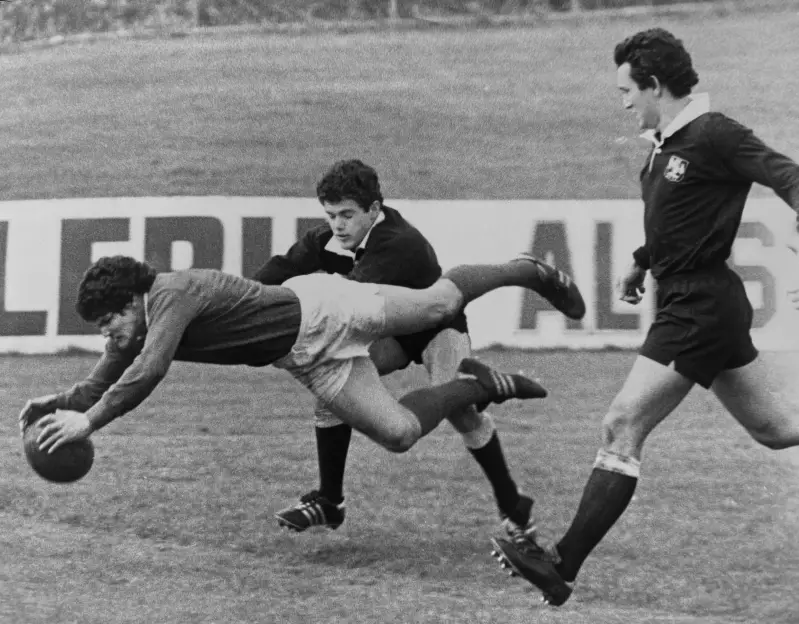
One of the big challenges in sports photography was to record scoring moments, particularly in rugby. It wasn't that easy running up and down the sideline at Rugby Park trying to capture that magic moment like this full flight image of Murray Parkes scoring for Poverty Bay.

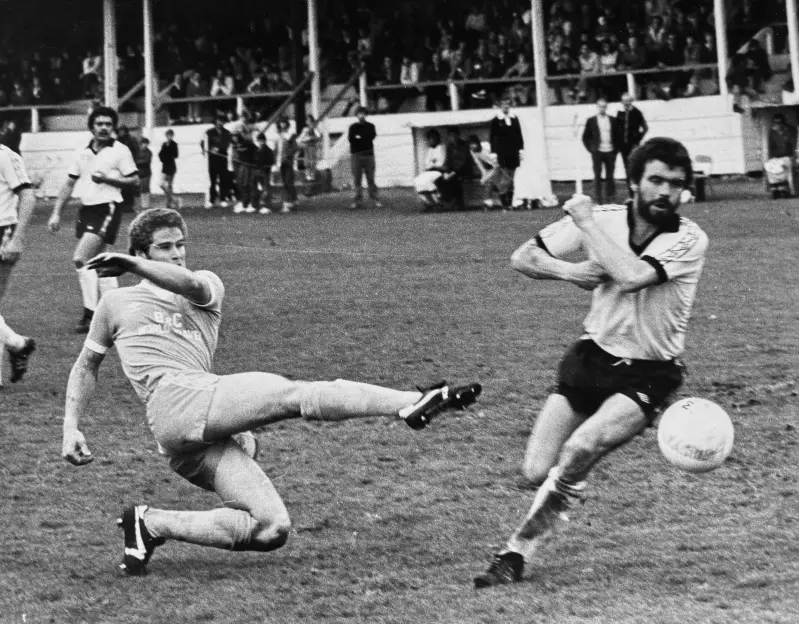
With football, or soccer as we called it then, it was not so easy to capture such moments with the action of kicking a goal and the antics of the goal keeper often widely separated. This image is of Gisborne City striker Grant Turner in action.
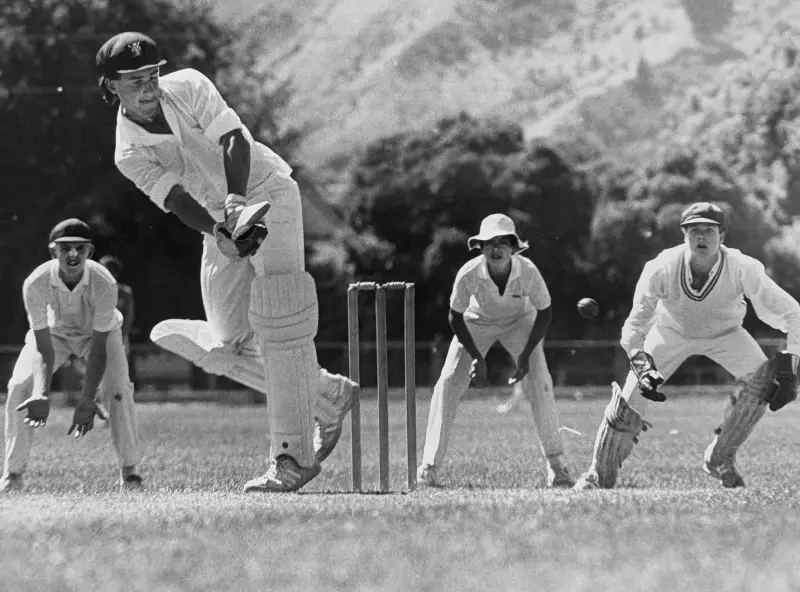
Cricket was another challenge. Bails in the air was the goal but a batsman shot like this, with the ball still in the image, was the next best result.
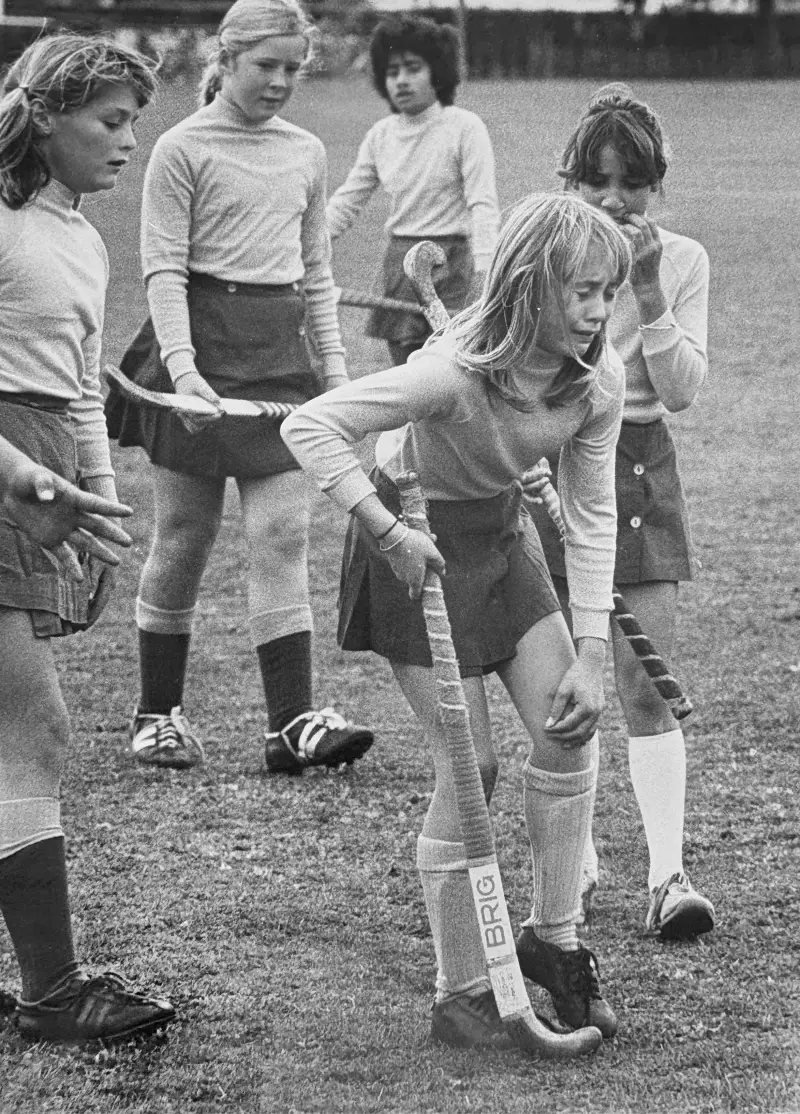
While action was the main focus of sports photography we were always on the look out for what we
called "human interest' such as this poignant moment after a young hockey player took a wack on the shin.
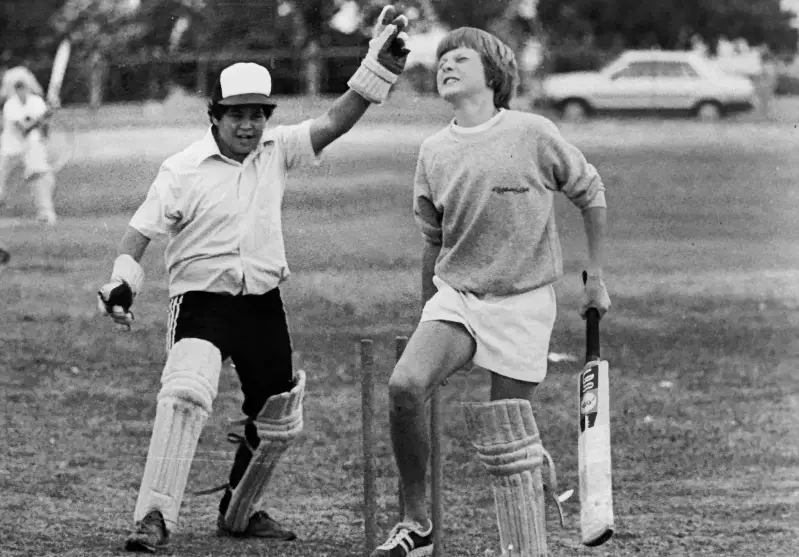
"Howzat?— It bloody hurts!" Sometimes it was the caption that made the picture.
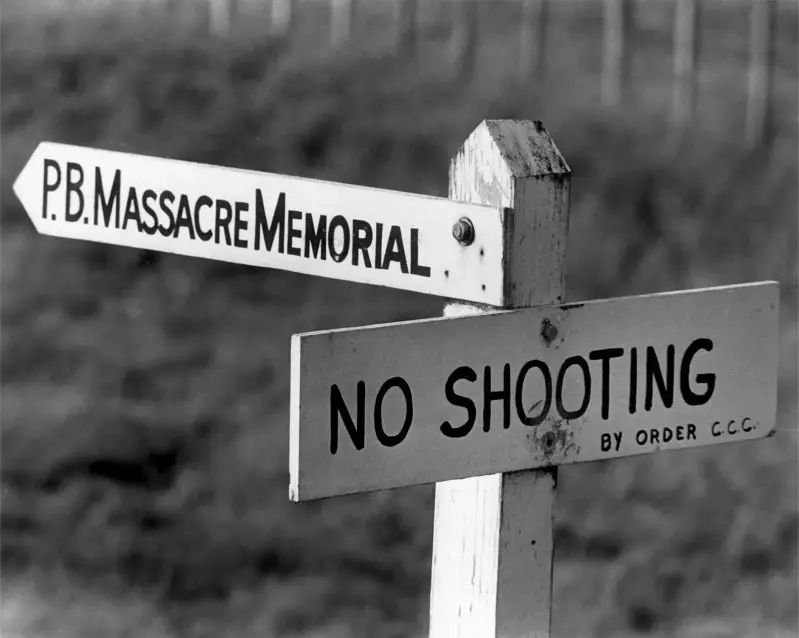
Always on the lookout for quirky subjects to snap, I spotted these two incongruous signs at the Settlers Cemetery near Makaraka.
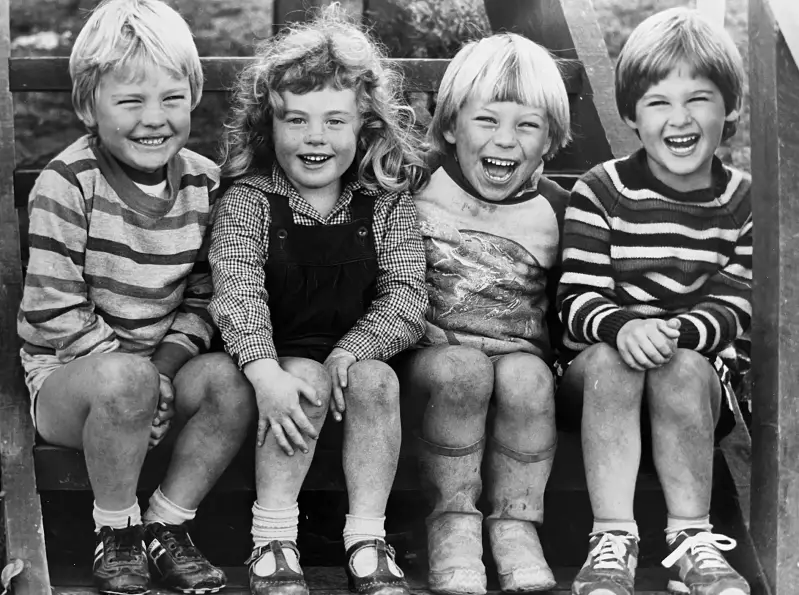
One of my self-appointed roles through the '80s was to document the kids growing up in our Wainui Beach neighbourhood. From — left Dane Simpson, Heidi Clapham, Jared Drummond and Jay Papworth.
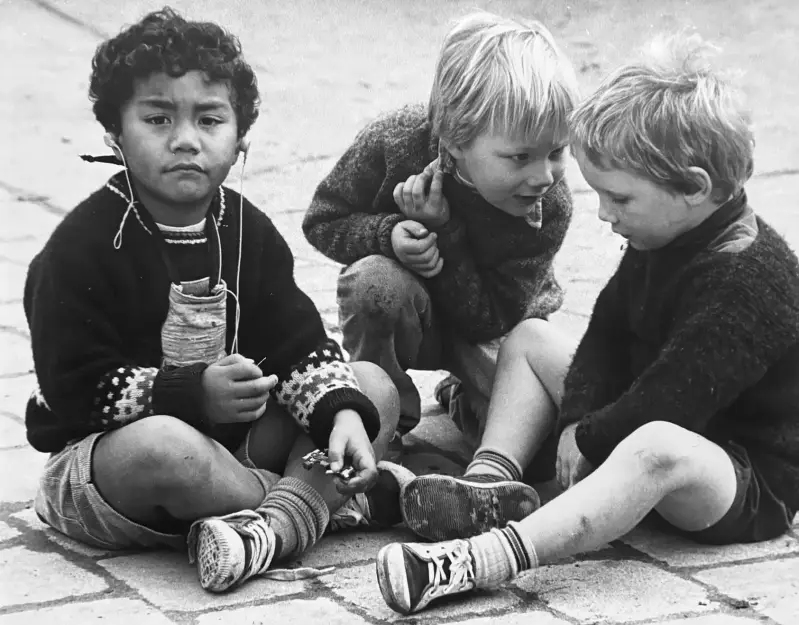
During a visit to a local kindy, this image captured the isolation of the hearing-impaired boy in this playful trio.
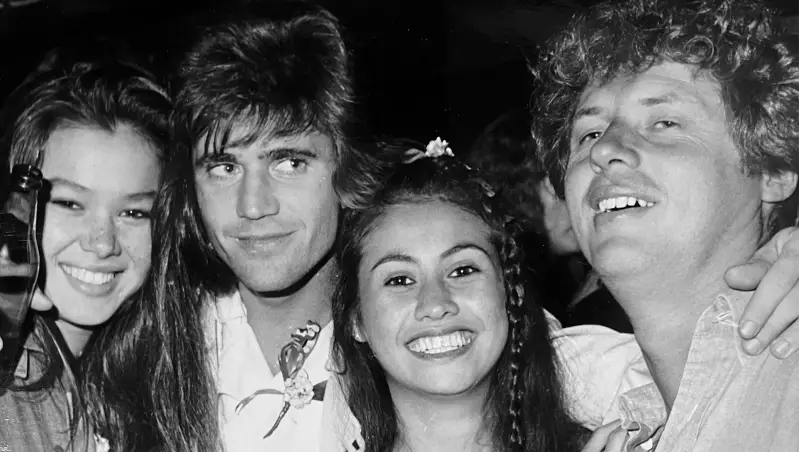
I took this photograph of Mel Gibson and film producer Roger Donaldson, and two of the Tahitian extras, at the wrap party for the movie 'The Bounty' which was partly filmed in Gisborne in 1984. Despite the smile, Gibson took exception to me taking the photograph and 10 minutes later we were going at each other in a full-on brawl in the bar of the Chalet Rendezvous restaurant, after which I was ejected via the front door.
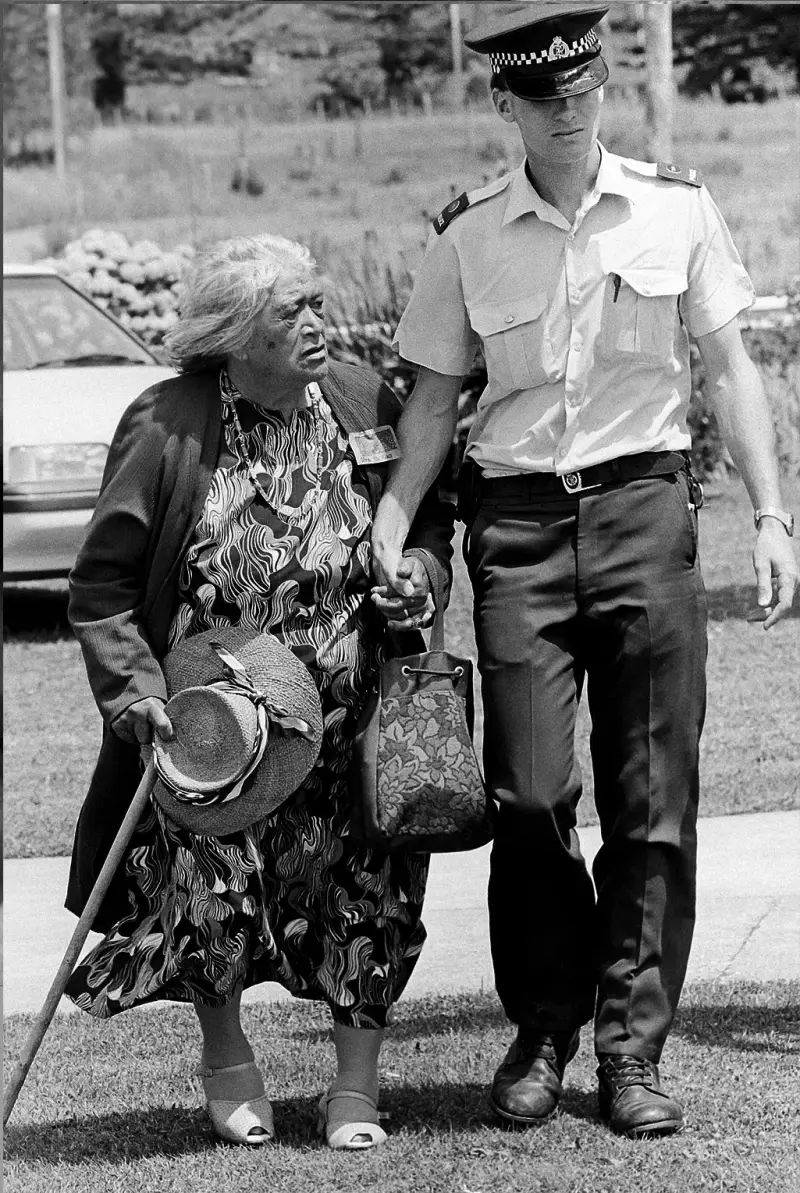
On this occasion I was later commended for my sensitive eye after taking this image of Police Constable Nigel Hendricks assisting a frail kuia at a major political hui at Te Araroa in the 1980s. I later got to know Hendricks well after he was savagely attacked and maimed for life by the notorious criminal John Gillies in 1993.
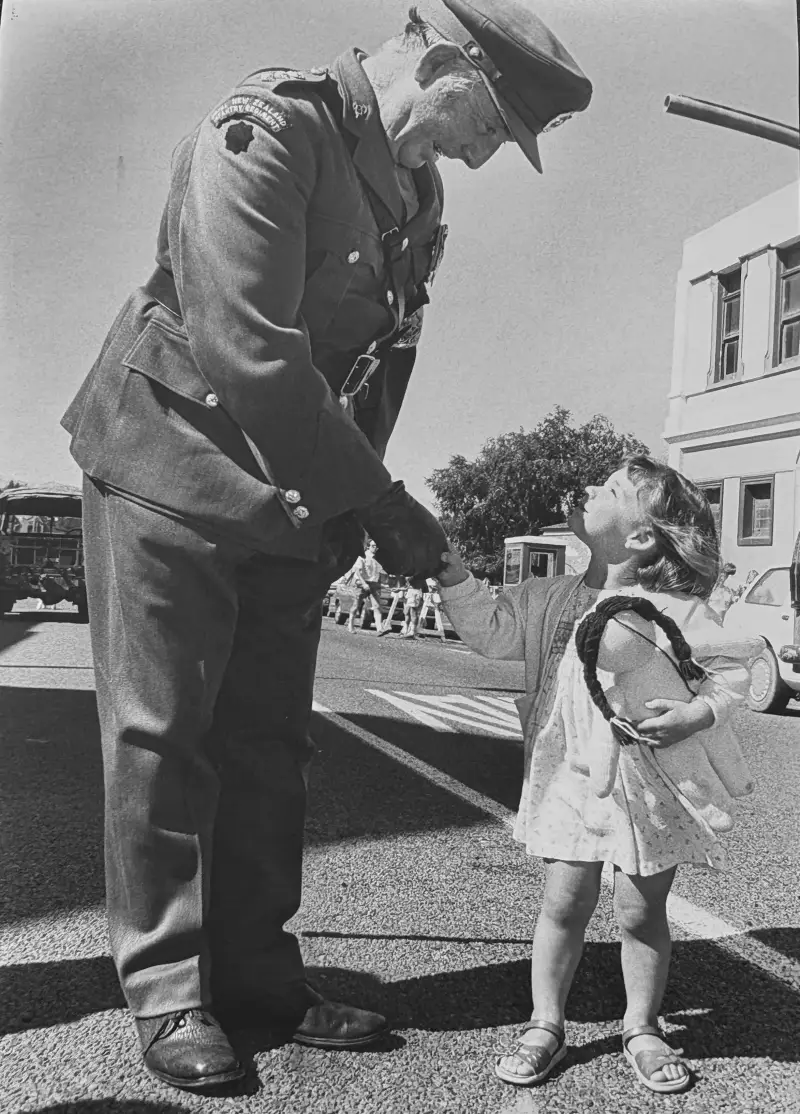
A similar image was this one of a top brass in the New Zealand Army greeting his grand-daughter during a parade in the city.
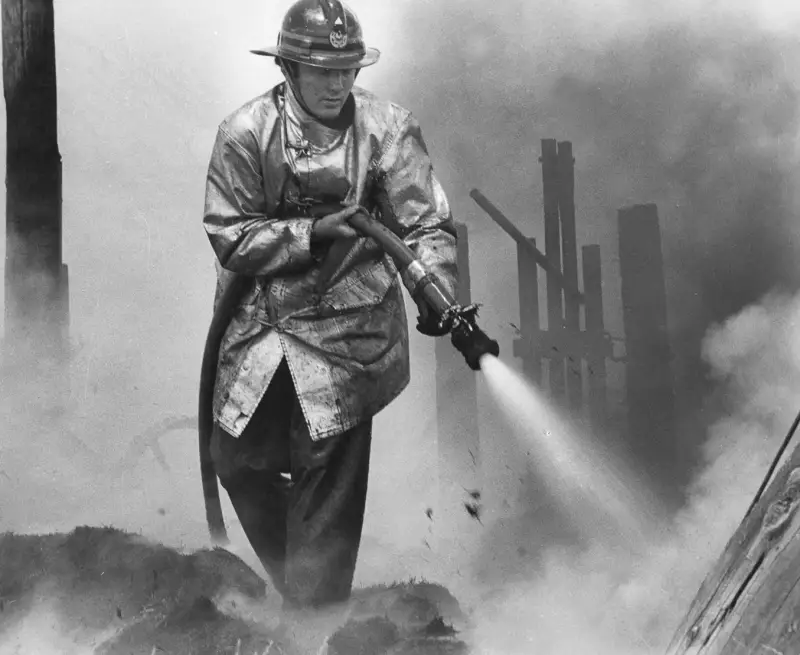
As a news photographer I loved it best when there was real live news breaking such as this fire where I was able to position myself to get this front on image of Gisborne fireman Pat Hogan in action. In those days the emergency services usually trusted the media to be self-reliantly safety aware enough to enter dangerous situations to get close-up pictures without hurting ourselves.
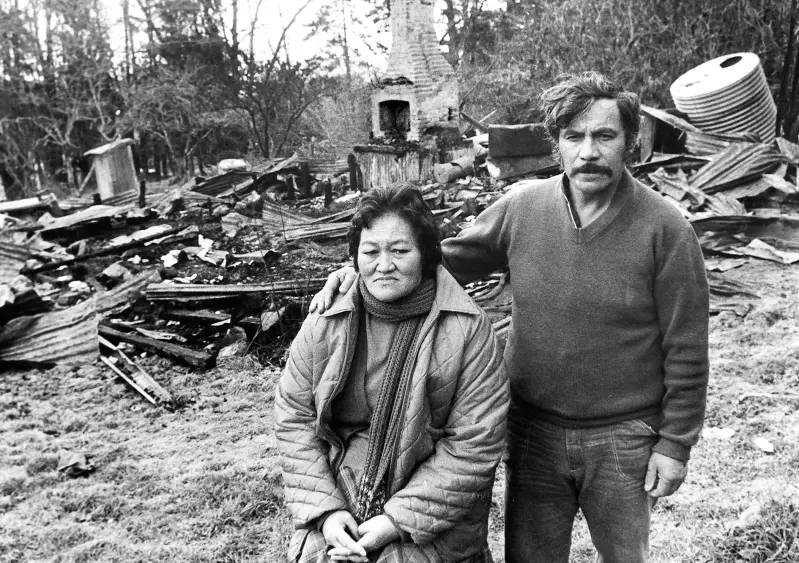
On most occasions I arrived at the scene of a disaster after the action was over. It became a necessary skill to be able to sensitively intrude on people's private grief in the aftermath of a tragic event, such as setting up this image with a couple who had lost everything in a house fire at Waipiro Bay the night before. This picture illustrated the front page story by Dave Conway that carried the dramatic introduction that I have never forgotten: "Neighbours ran screaming into the night." Dave later told me his tory and my picture helped the couple successfully negotiate a tricky insurance claim.
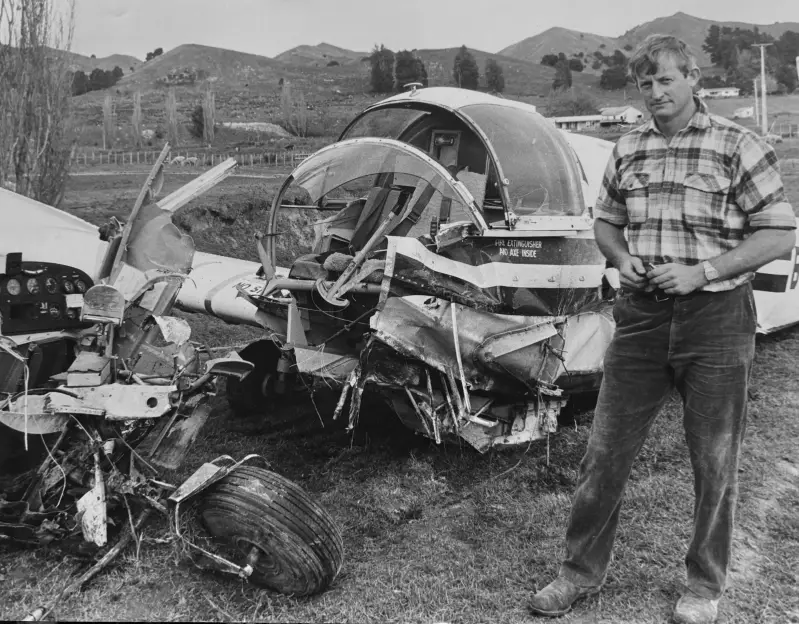
A similar situation was when I was sent out to see if I could get a photograph of a top-dresser aircraft crash in the Gisborne hill country in 1985. I was lucky to find the pilot Peter Andrew nearby who miraculously had escaped unhurt and was happy to pose in front of the wreckage. I was disappointed however when I later found out he had been ejected out of his boots when he flew through the cockpit window. If had of known I would have asked him to stand in his socks holding his boots. I still cringe at the missed opportunity.
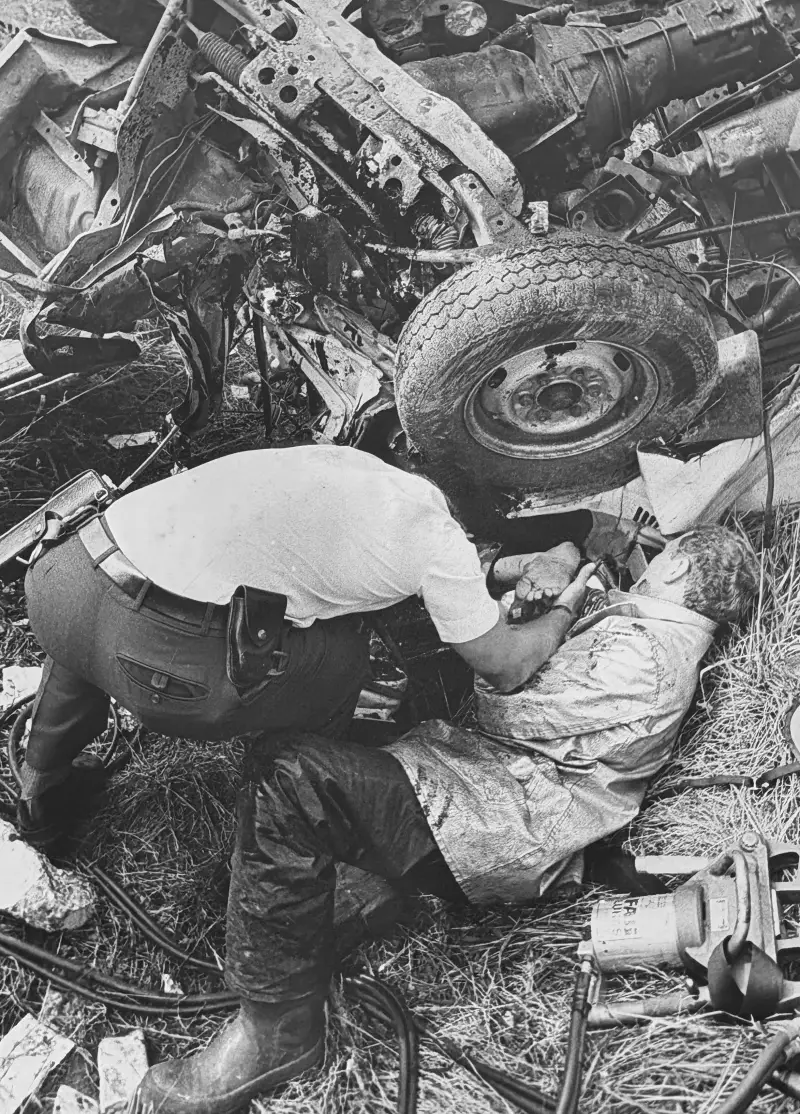
Having good relations with the local police, fire and St John Ambulance paramedics was essential to be able to get close to the scene of incidents and accidents to get the photos needed for a news story. Here's ambulanceman Richard Ralph and fireman Pat Hogan work side-by-side to support and extract a man almost imbedded in a car wreck.
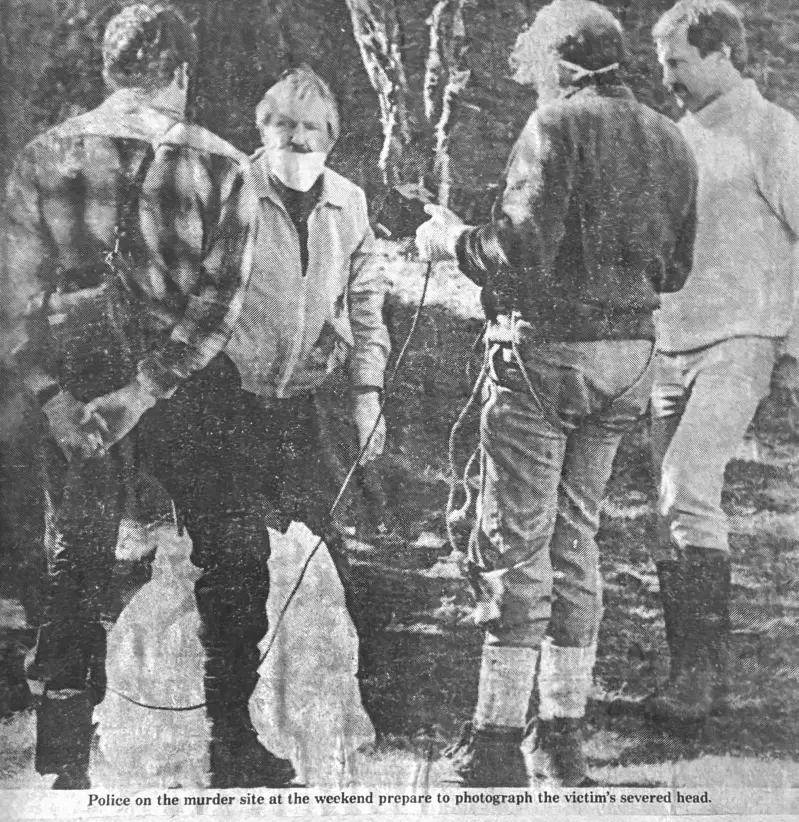
This is probably the picture I am least proud of and proved what can happen when the media gets too friendly with the authorities. Gisborne police boss Mick Huggard allowed me to inside the tape just as Gisborne detectives recovered the remains of a young man who was the victim of a brutal ritualistic murder committed by a member of the Ruatoria Rastafarian group on the East Coast in August of 1985. I sent my undeveloped film via a chartered plane out of the Ruatoria airstrip to the New Zealand Herald in Auckland and explained to the chief reporter over the phone that the white bag in the pictures contained a severed head. The beheading was key evidence the police wanted to withhold to help them in their interviews with the murder suspect. When they saw the picture on the front page the next morning the detectives were totally pissed off with me and our relationship was never the same.
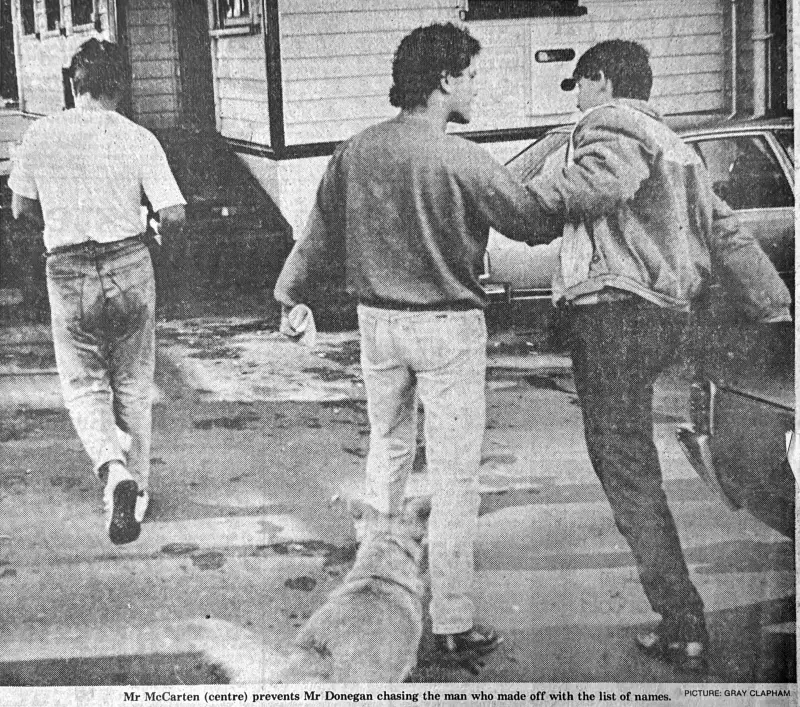
I made the New Zealand Herald front page again while working for the newspaper in Auckland in May of 1988 after I had left the Gisborne Herald. In the midst of a complex Labour Party infight I was sent to stake out a party branch meeting attended by the local MP Richard Prebble at a complex in Herne Bay and just as I got there three men ran from the building and a scuffle took place right in front of me. One of the men had rushed in and grabbed a list of those attending the meeting and was pursued by Prebble supporter Seamus Donegan. Union activist Matt McCarten grabbed Donegan to allow his accomplice to escape with the list. I had no idea what it was all about really but I was congratulated for getting the picture of the moment.
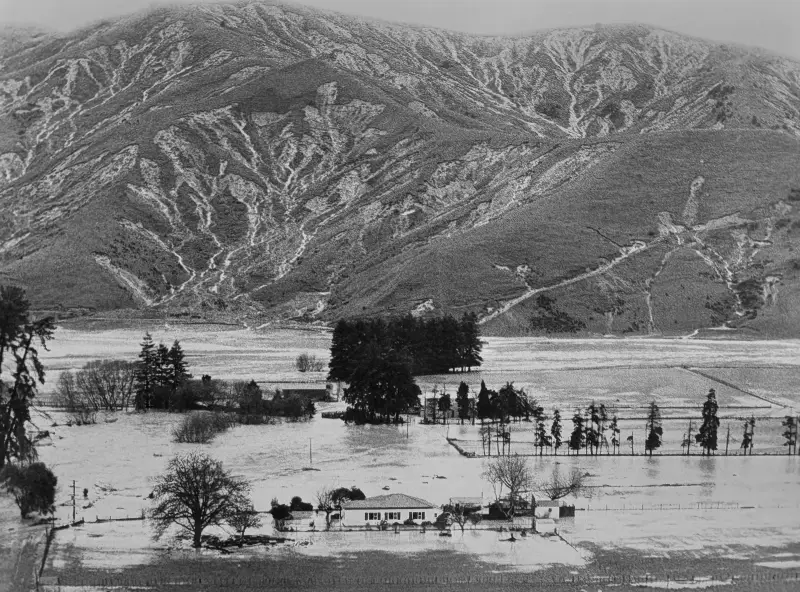
I took many photographs from the air in the aftermath of a flood that ravaged the Gisborne hill country when 200mm of rain fell on the district over a 24 hour period in July of 1985. This flood was upstaged three years later by Cyclone Bola.
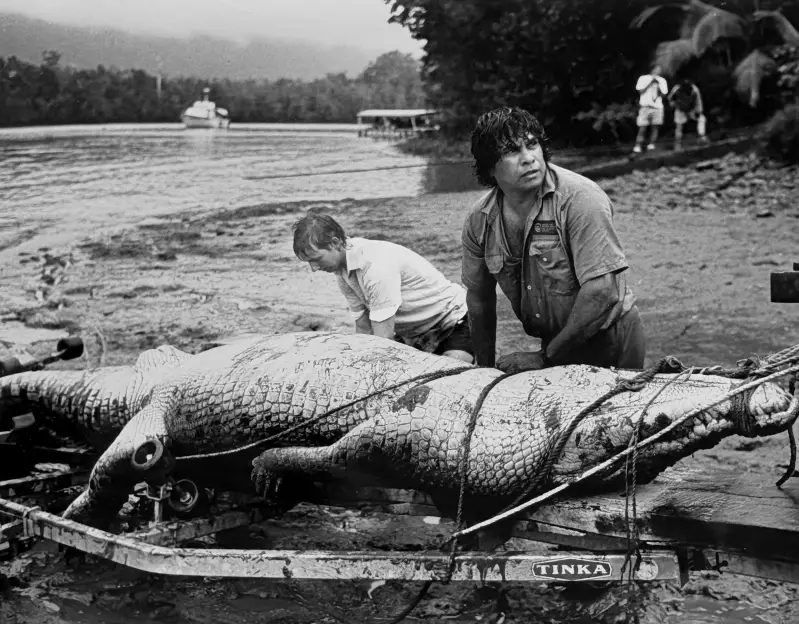
I was on the spot with my camera at the Daintree River in Far North Queensland when this monster crocodile who
was terrorising locals was captured and killed in the late 1980s..
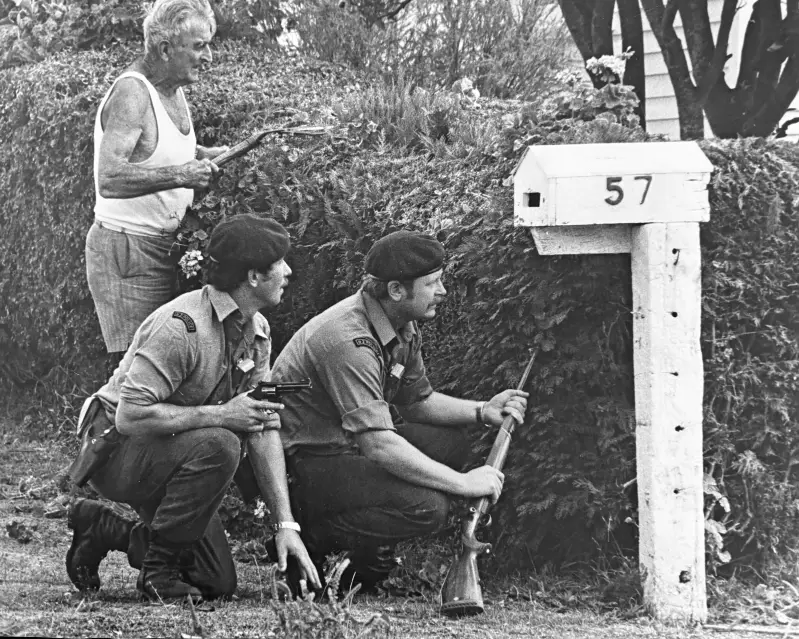
I spotted two policemen with guns during and armed offender incident in a city suburb one day and to my amazement saw them creep up past a gentleman cutting his hedge in his white singlet. The man took no notice of the officers. Later I found out it was merely an exercise.
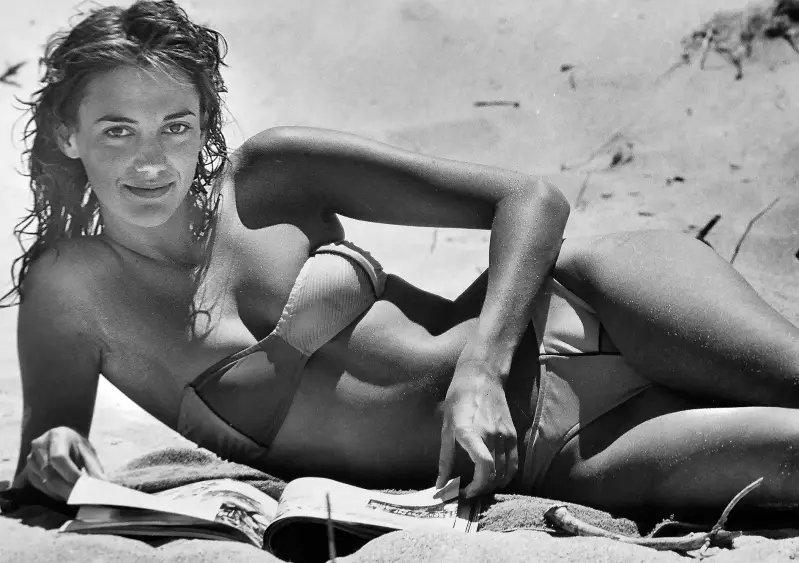
There wasn't hard news happening everyday in my years as a news photographer with the Gisborne Herald and in those days we were sent out-and-about to look for pictures that could, with a clever caption, fill space on the news pages. In summer, pictures of people sunning on the local beaches were deemed news-worthy enough to illustrate a "hot summer's day in Gisborne". It became a necessary photographer's skill to learn how to nicely approach girls in this manner without anything 'sleazy' being inferred.

Working for the Gold Coast Sun newspaper in the 1980s, there was a never-ending demand for so-called "beachgirl" photographs.
Some ladies made a career of it, none more so that Suellen Underwood who later became a reality TV star undet the name Suzi Taylor.
The 1981 Springbok Tour
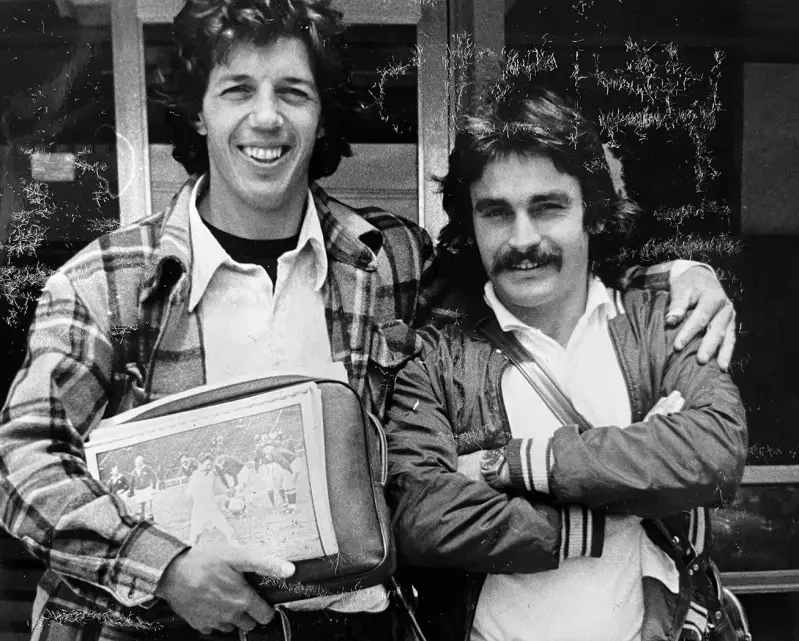
I set up this photograph of myself with Tim Shadbolt after I had had been subpoenaed to give evidence for the police in the case against a group of protesters after the 1981 Springbok Tour in Gisborne. Shadbolt was congratulating me because my eye-witness evidence and the photographs I was forced to hand over to the police actually turned the tables on the prosecution and the protesters were acquitted.
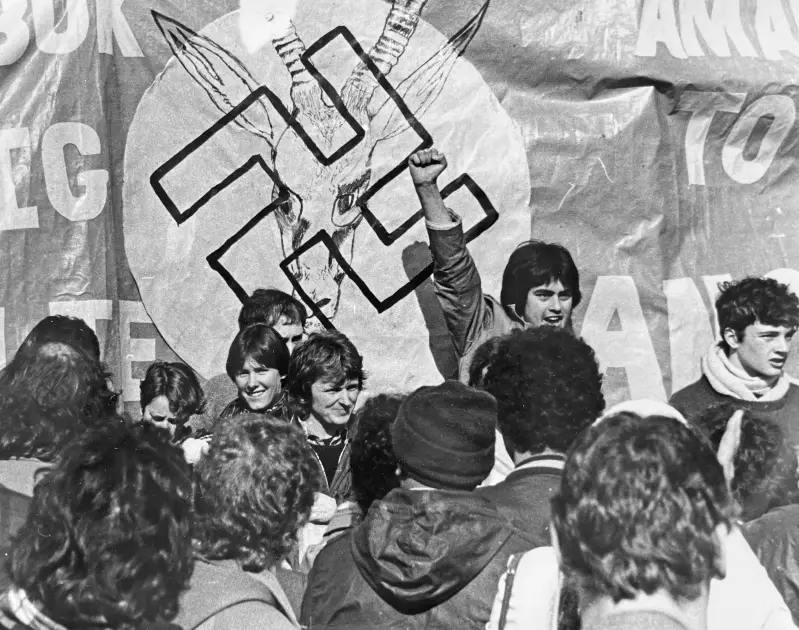
The banner with the swastika over the image of a springbok was aimed at the South African government. Local man Richard Brooking's fisted salute was a pre-warning that the country was about to descend into near civil war
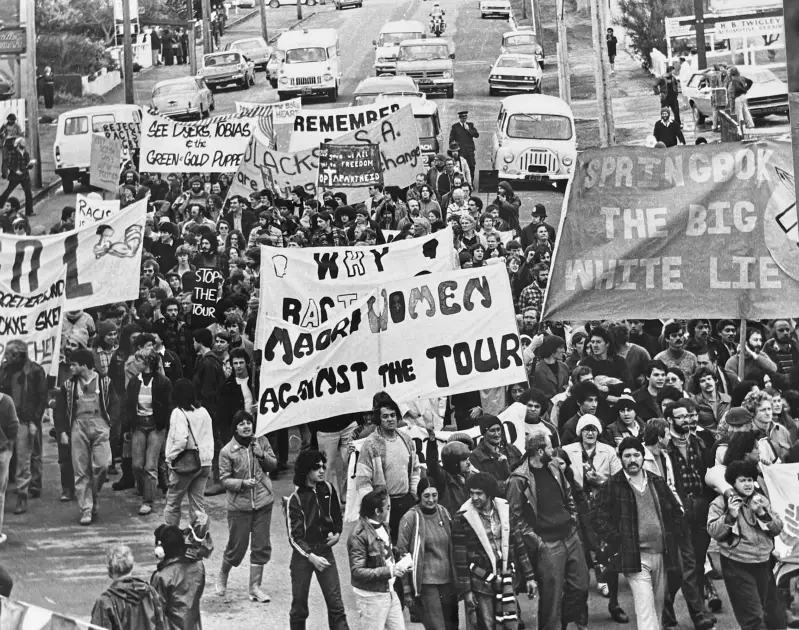
As the first match of the controversial Springbok Tour of New Zealand got underway at Rugby Park in Gisborne protesters marched down Childers Road.
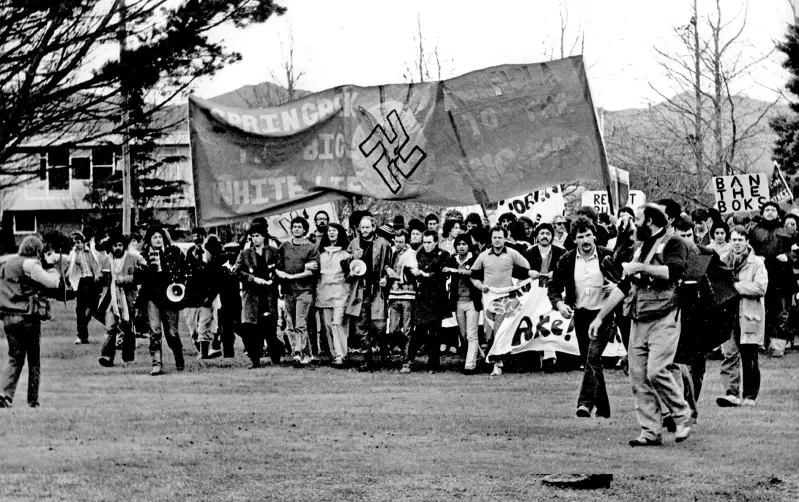
The police turned the protesters away from the road leading to the gates of Rugby Park and they were forced to travel up Lytton Road and then north along Gladstone Road. This was the moment the march outwitted the police by crossing the fairways of the Park Golf Course to the perimeter of the rugby ground where the match against Poverty Bay had started.
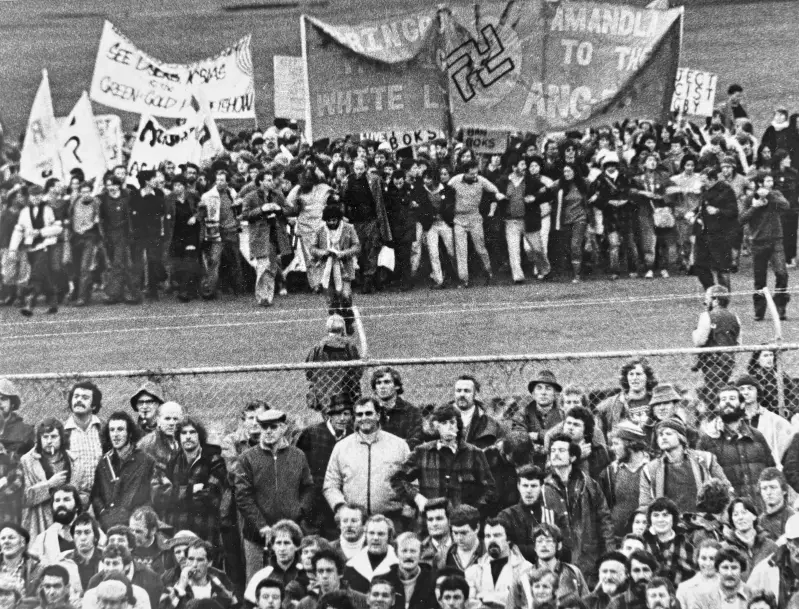
Despite my grovelling with the protesters, the Gisborne Herald front page picture from that day was taken by journalist Dave Conway with one of my cameras. I had handed him my Pentax Spotmatic with the screw-in Century 500 lens for safe keeping and from the reporters' box at the top of the stand at Rugby Park he was in exactly the right spot to get this image of the protesters approaching the rugby ground across the golf course behind the unsuspecting rugby fans on the embankment. It was in my mind a portent of the divide that was about to tear New Zealand apart as the Springbok Tour began.
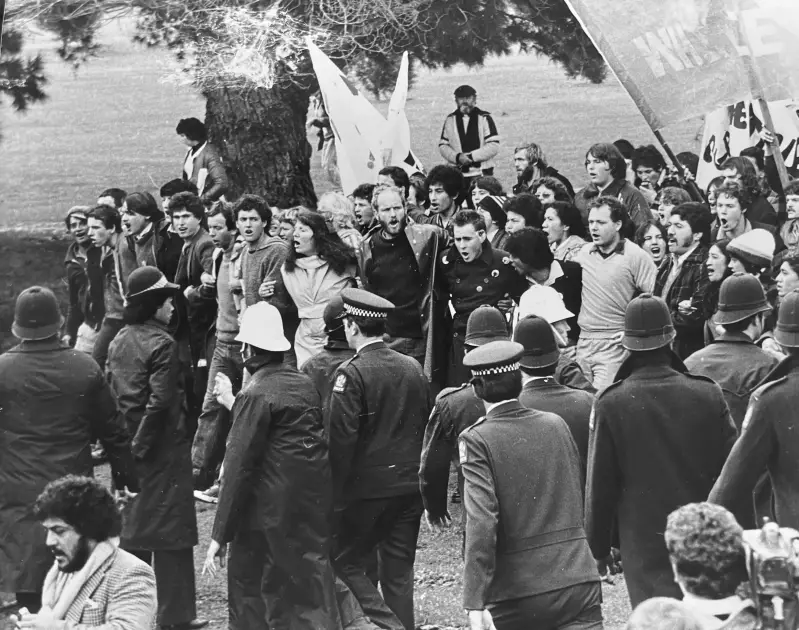
The police, anticipating trouble at the gates to rugby park, has to move quickly to head off the march, surging to the eastern perimeter fence of the grounds.

It was right about now as the police and protesters clashed that everyone realised this was not going to end peacefully.
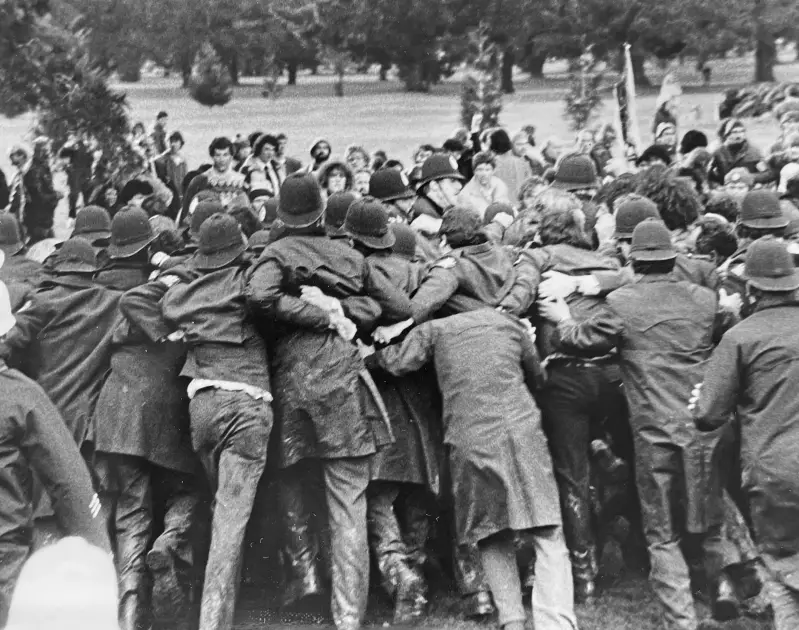
While the rugby match played on 50 meters away the police put down a scrum of their own to force the protesters back from the fence to Rugby Park
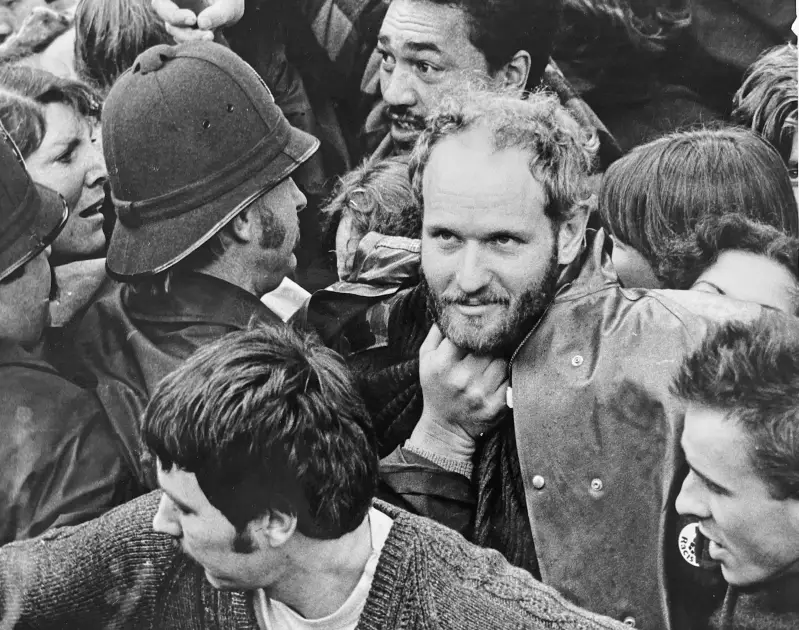
One of the protest leaders appeared pleased with the chaos erupting in the golf course adjacent to the rugby match.
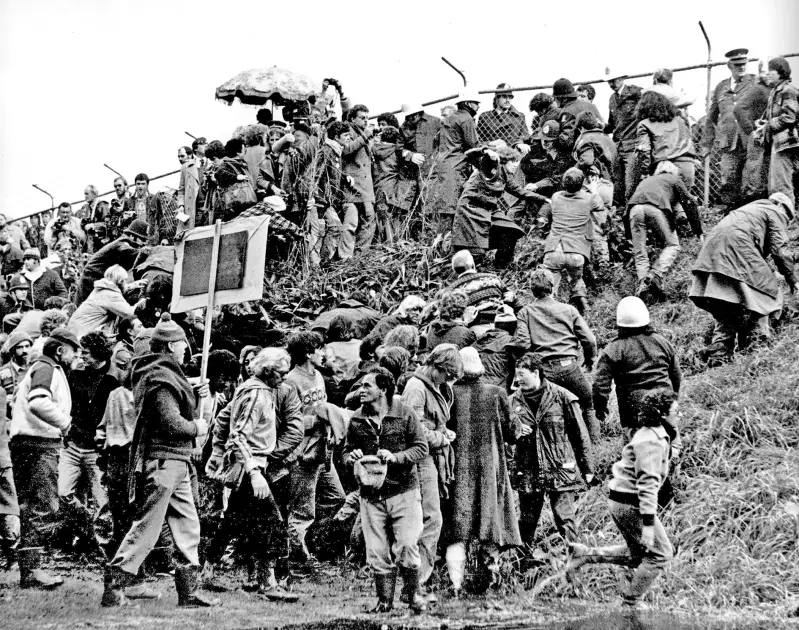
Despite the best effort of the police some of the protesters broke through and climbed a steep bank to the perimeter fence. This was one of the several images the police subpoenaed me to present to the court.
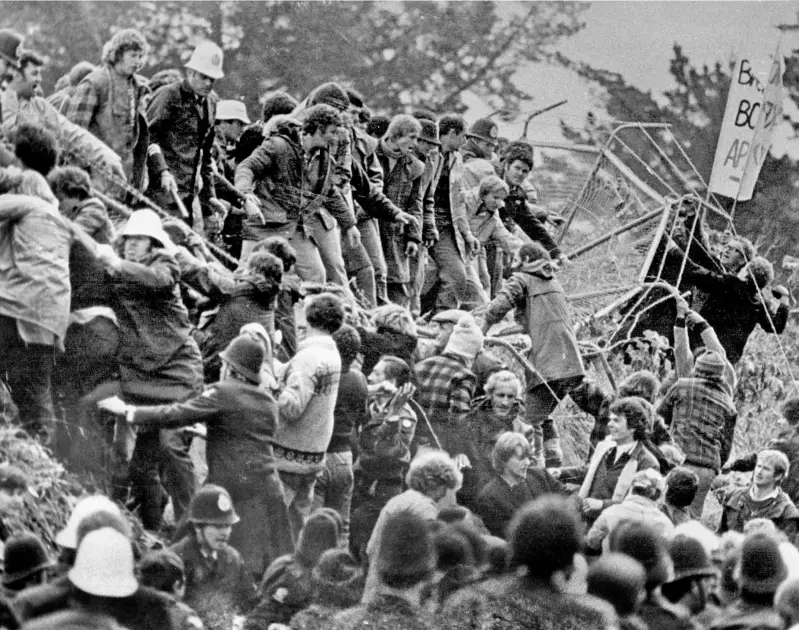
The protesters managed to pull down the wire fence only to face retaliation from rugby supporters on the other side. They were unable to gain access to Rugby Park but a week later in Auckland they managed to storm Eden Park and invade the playing field.
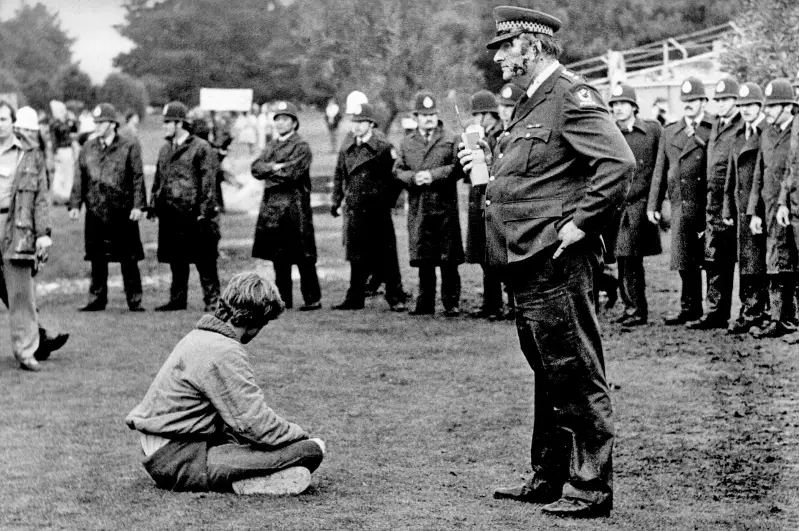
Police man of the moment was cool, calm and collected Police Inspector Mick Huggard who led the police in their strategy to keep the protesters from disrupting the rugby match.
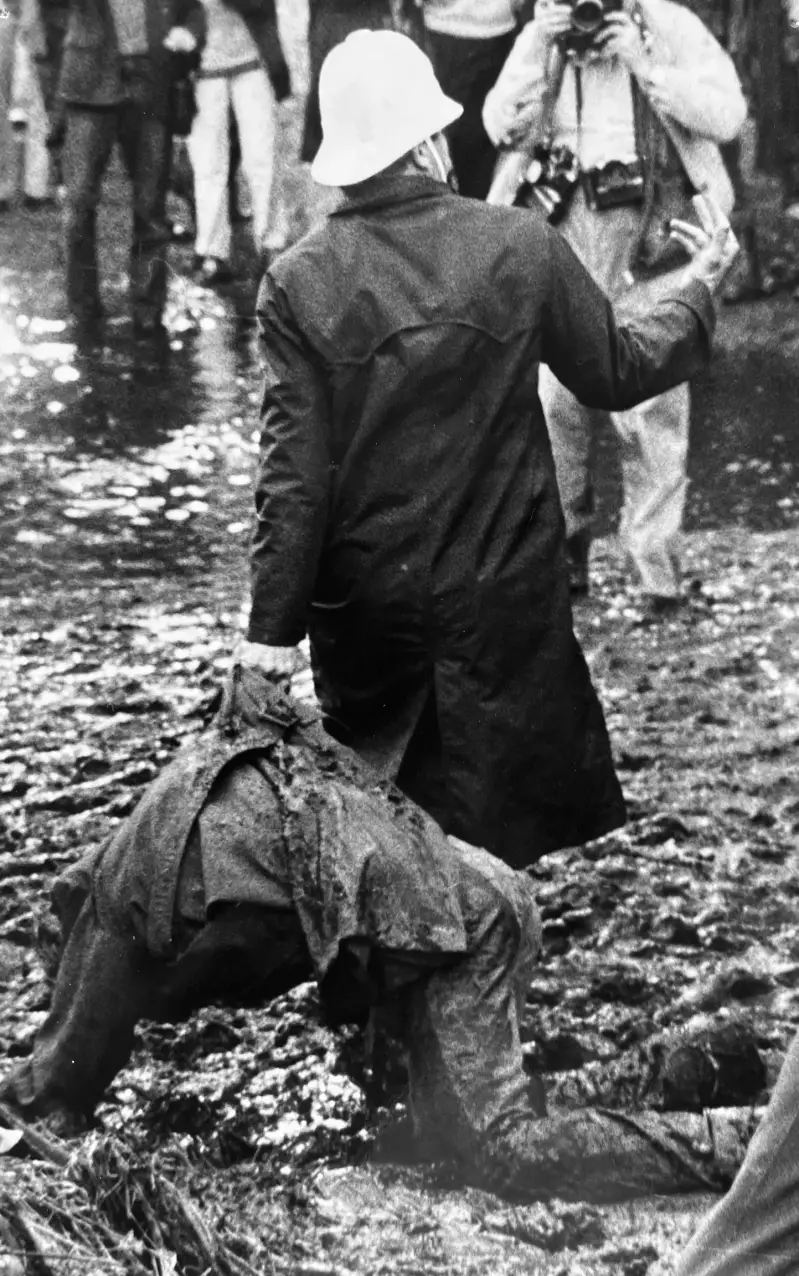
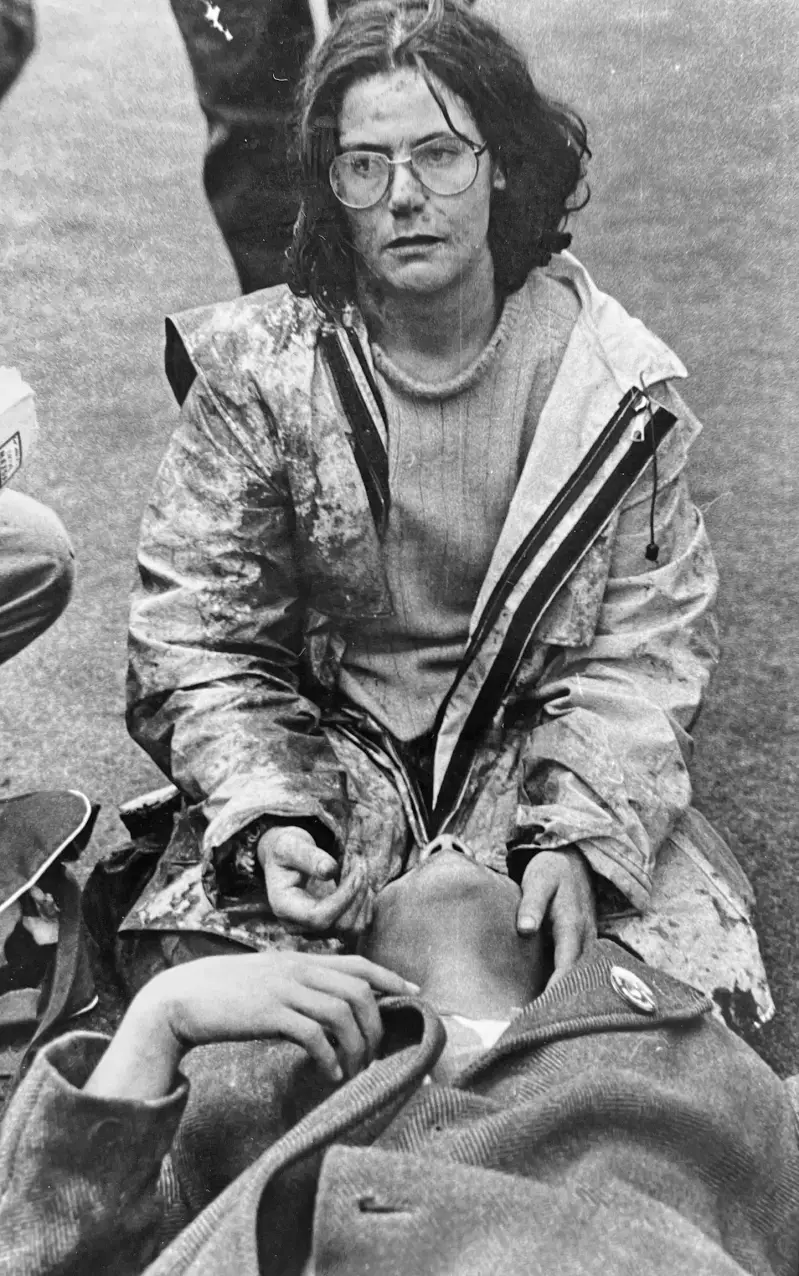
Left: A police officer calls for assistance as he drags a protester out of the mud bath the altercation created on the golf course. Right: A protester comforts a friend injured in the clash with police.
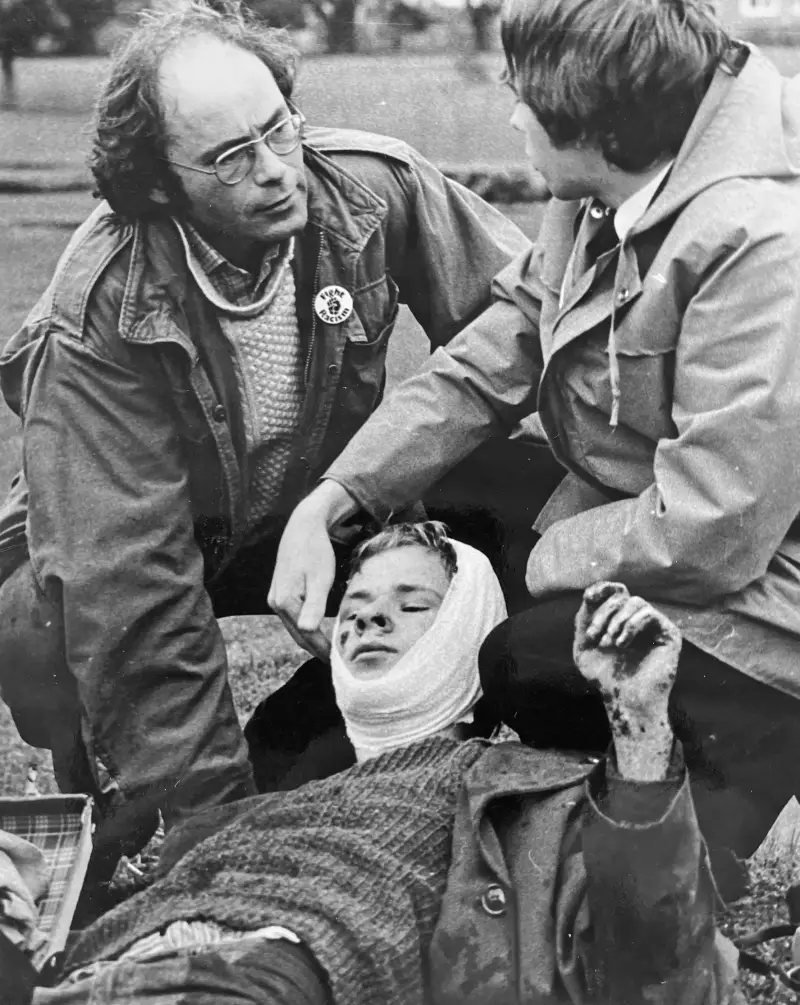
A St John ambulance officer tends to the head injury of a protester. At this stage it became clear that the protest against the Springbok tour was no longer a joke. Following the Gisborne match the protesters started wearing helmets to ongoing protests. Former Prime Minister Norman Kirk’s prediction eight years earlier that a Springbok tour would result in the ‘greatest eruption of violence this country has ever known’ seemed close to being realised.
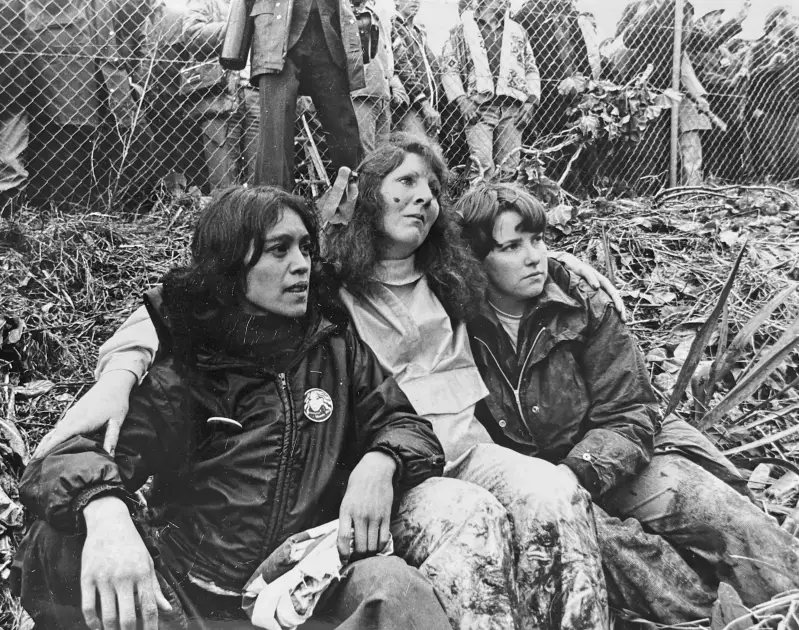
As the clash with the police became more and more violent these women who managed to climb the bank look back in despair at the brawl taking place.
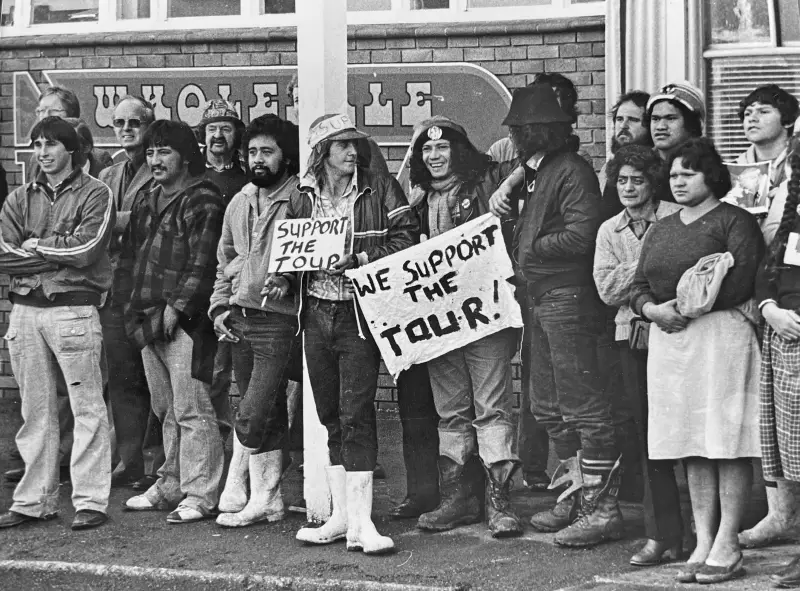
Earlier in the day this small group of supporters made their feelings known as the anti-tour protesters gathered at
Heipipi Park (then known as Endeavour Park) in the city.
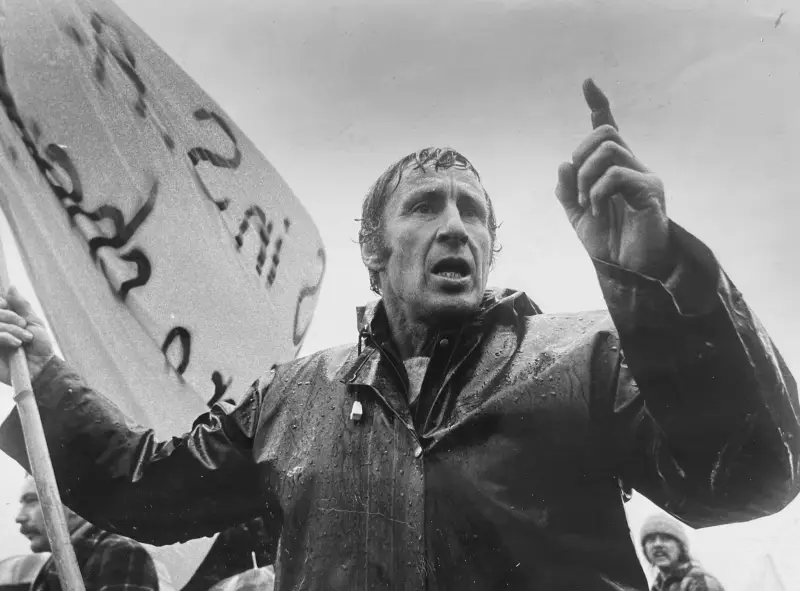
Local artist and activist, the late Graham Mudge, let his feelings about the tour be known.